
If you were ever curious about skiing in New Mexico’s Taos Ski Valley, this guide is for you.
Skiing in New Mexico sounds like a ridiculous notion but it’s amazing. If you stop and think about it, it’s not that hard to believe. Despite its southern latitude, most of the state of New Mexico is high elevation and Taos Ski Valley Resort itself is situated in the Rockies. Some years this ski resort gets an incredible amount of snowfall often measured in double digit inches per day. As of this writing there’s a major storm coming and the mountain is predicting 17″ overnight.
Steph and I love New Mexico a lot and Taos in particular. Taos was the first place we’d ever been to in New Mexico and we had a great time camping inside a vintage trailer and eating green chile cheeseburgers. We also ski a lot so when I heard about this place, it was only natural that we pack up our skis and empty bellies and head on down to the Southwest.

Why you should go to Taos Ski Valley
Taos ski valley is an easy 4-5 hour drive from Denver or a 2 hour drive from Santa Fe. It’s not a luxury destination like Whistler or Jackson Hole but it’s also not a tiny local ski hill either. Taos boasts some pretty extreme terrain that can challenge any level of skier, in addition to well maintained groomers for those who prefer skiing as a vibe rather than an extreme sport.
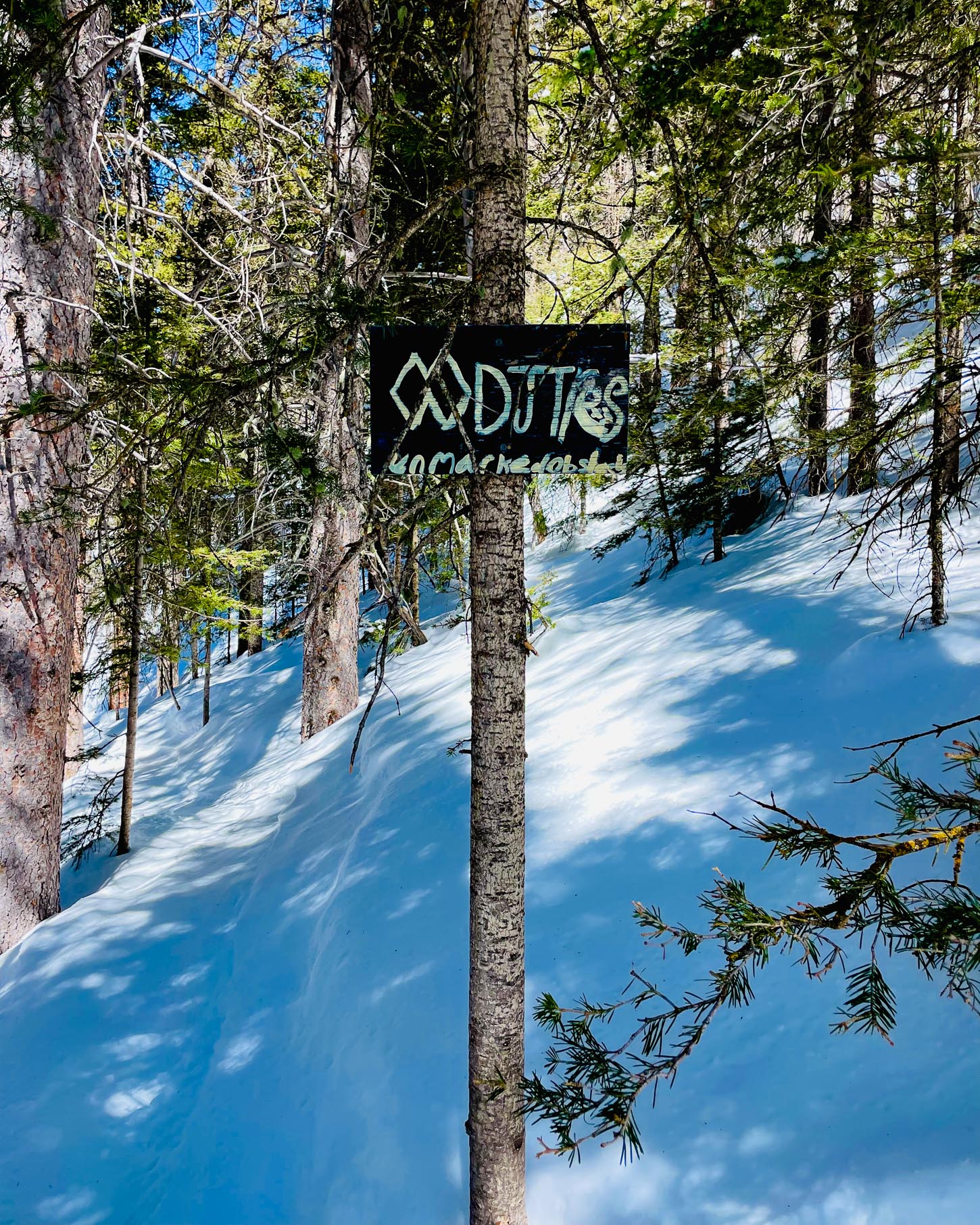
Just like the state of New Mexico, Taos has insane amounts of charm and a unique personality you won’t find anywhere else. From hand painted signs marking DIY trails to avy dogs you can pet (most places understandably won’t let you pet the working dogs), there’s no mistaking it for anywhere else you might ski in the world.
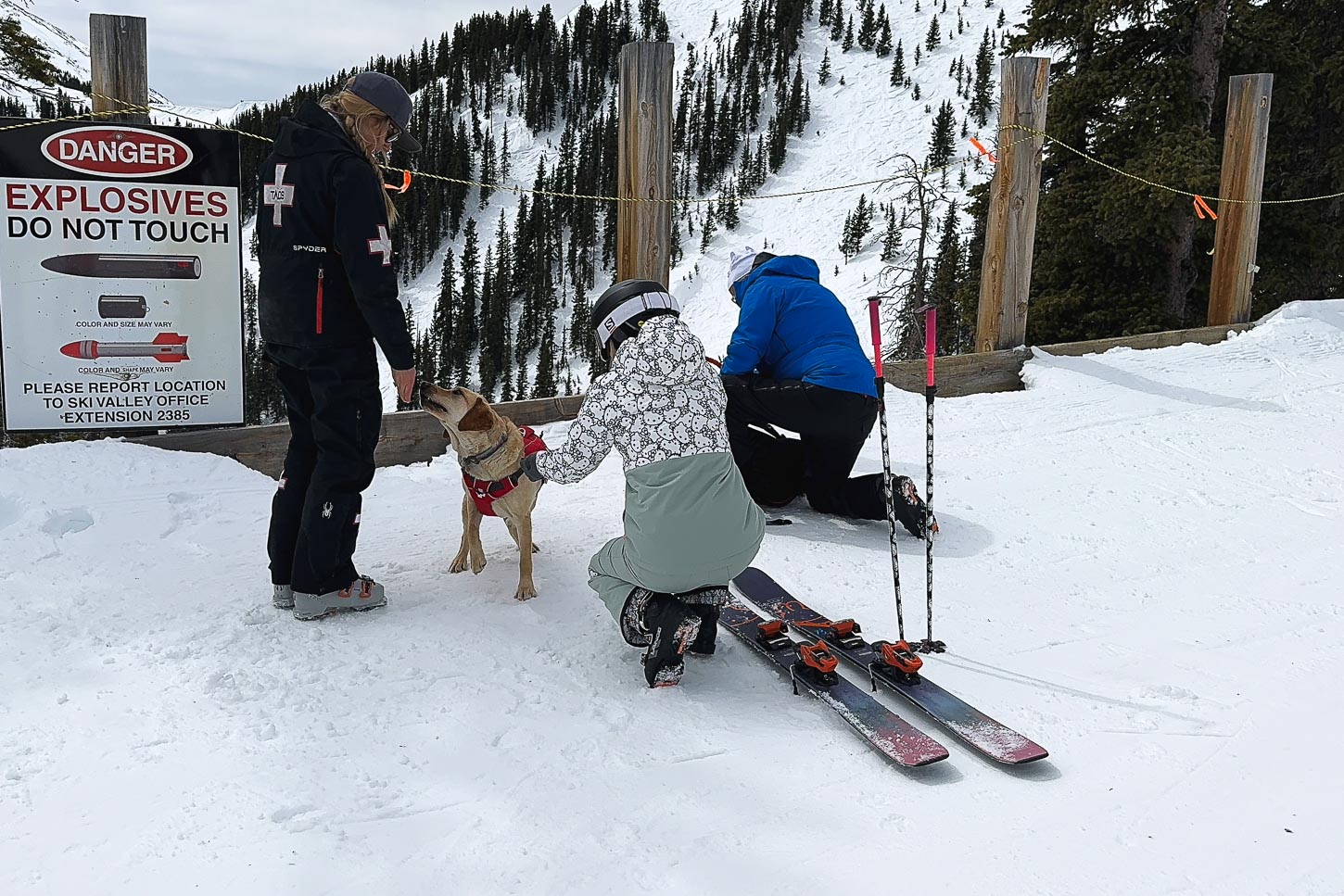
And of course, the snow is super dry and fluffy, owing to the resort’s high altitude and continental location. It’s also (probably) the sunniest ski resort in the world with over 300 days of sunshine, making for high chances of perfect bluebird powder days.
Skiing at Taos
We had a lot of fun on all of the runs at Taos. In terms of difficulty Taos is extremely mid, with the bottom half of the mountain well suited to beginners and of course Kachina peak suitable for experts only (more on that below).
Most of the runs at Taos are wide open and neither too short or too long. They’re relatively pitchy without being too extreme for beginner-intermediate skiers. Unlike Colorado you’re basically ok to ski anywhere you can access with very few (well-marked) no-go areas. I loved the easy-going ski vibes at Taos, as well as the wide variety of terrain and the quality of the snow. Basically, I loved it all.
Kachina peak
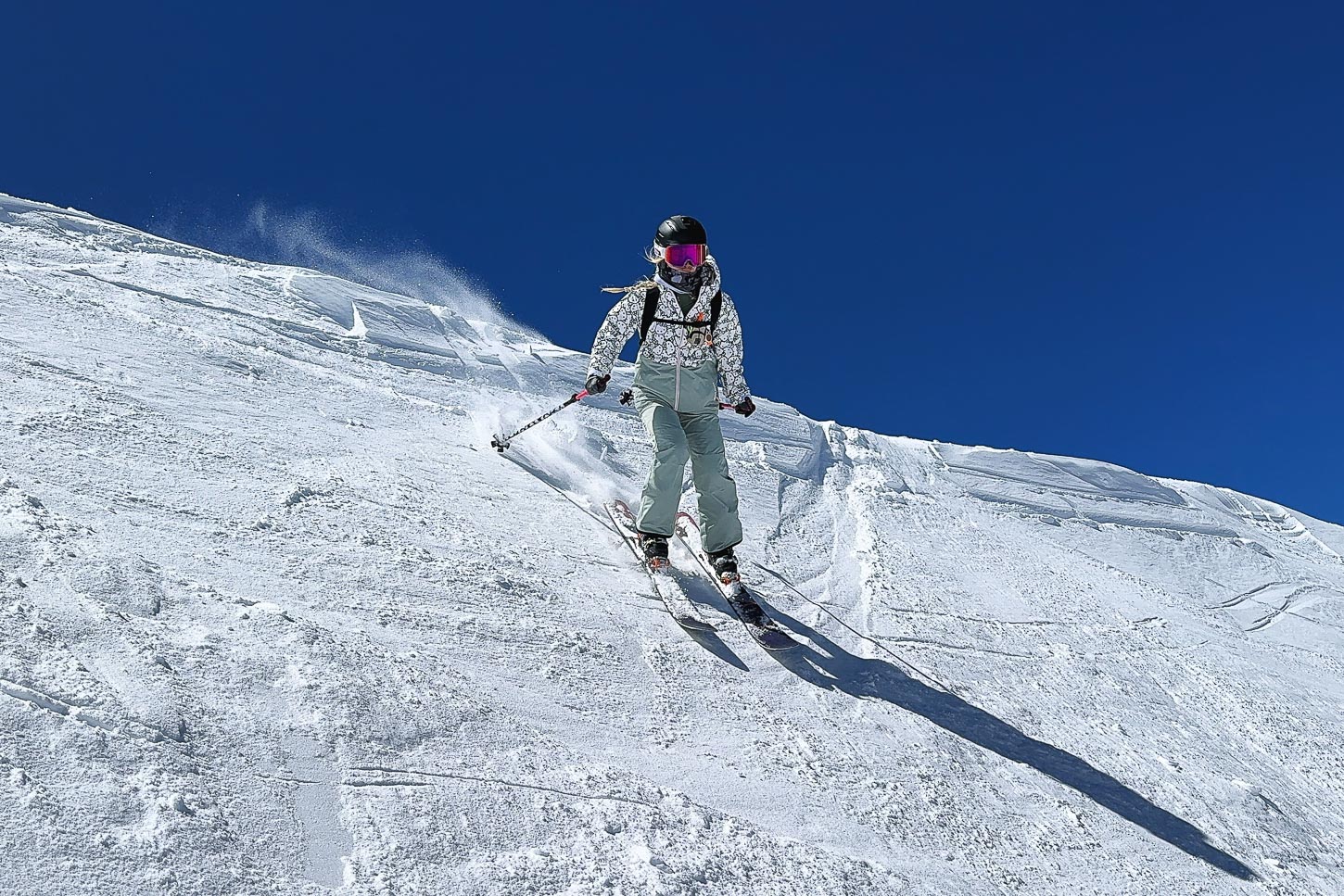
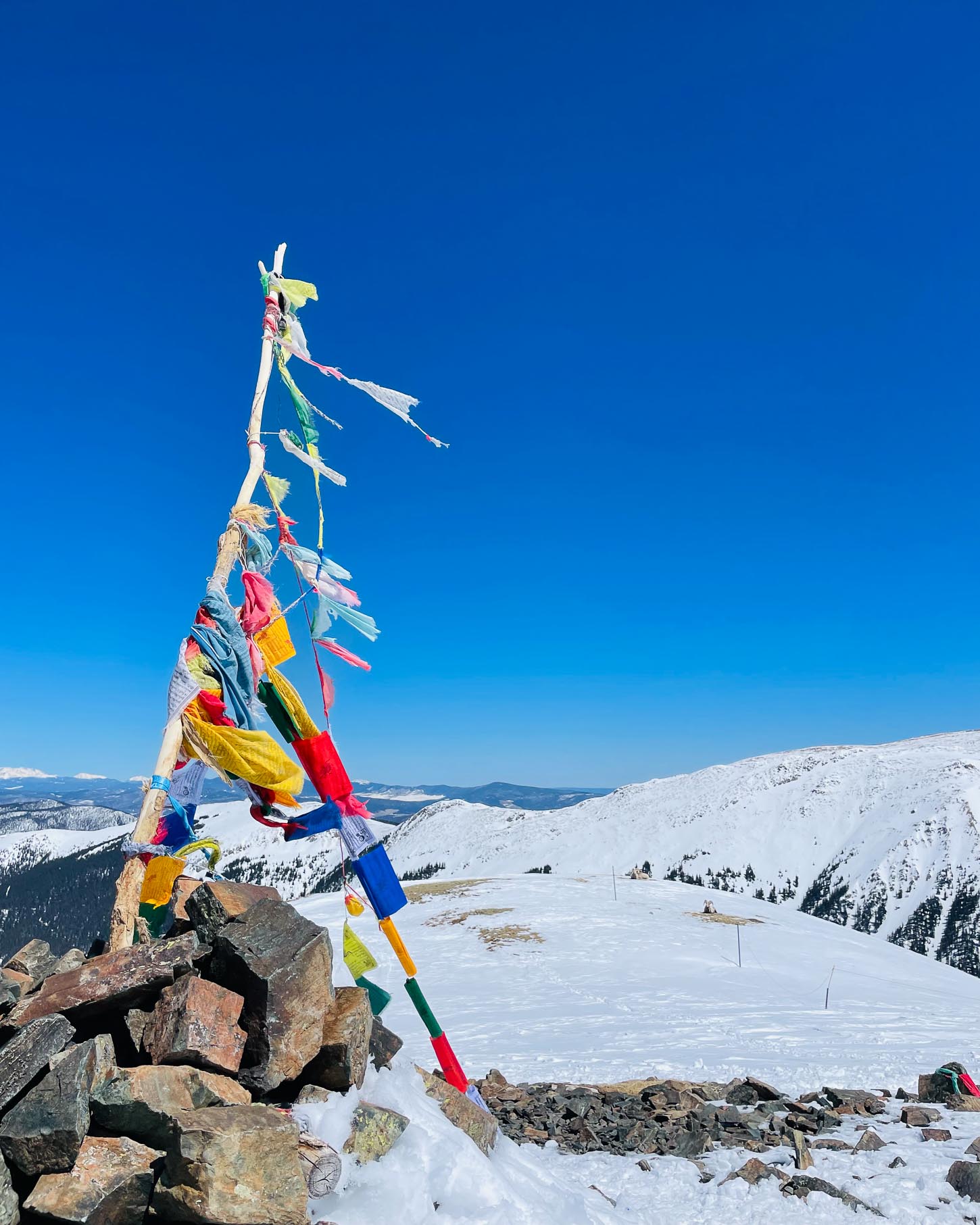
One of the best parts of Taos is the Kachina Peak, with its creatively named runs K1 through K6. Depending on the snowpack when you go, it’s a bit of an uphill climb from the top of lift 4 to the base of Kachina peak lift, but it’s well worth it for the views as well as the skiing. At the top of the lift is a very short uphill hike that reaches some classic mountaineering flags marking the summit with resident mountain goats nearby, visible in the photo below. You can see for miles and miles on a clear day.
You kind of do need to be an expert but the runs off this chair are more of a west coast black rather than the double black runs they are advertised to be.
Taos Ski Valley apres and on mountain eats
Taos’ apres scene is not exactly world class in comparison to major destinations in Europe, Vail, or Whistler. There’s basically a few options in the village and nothing else.
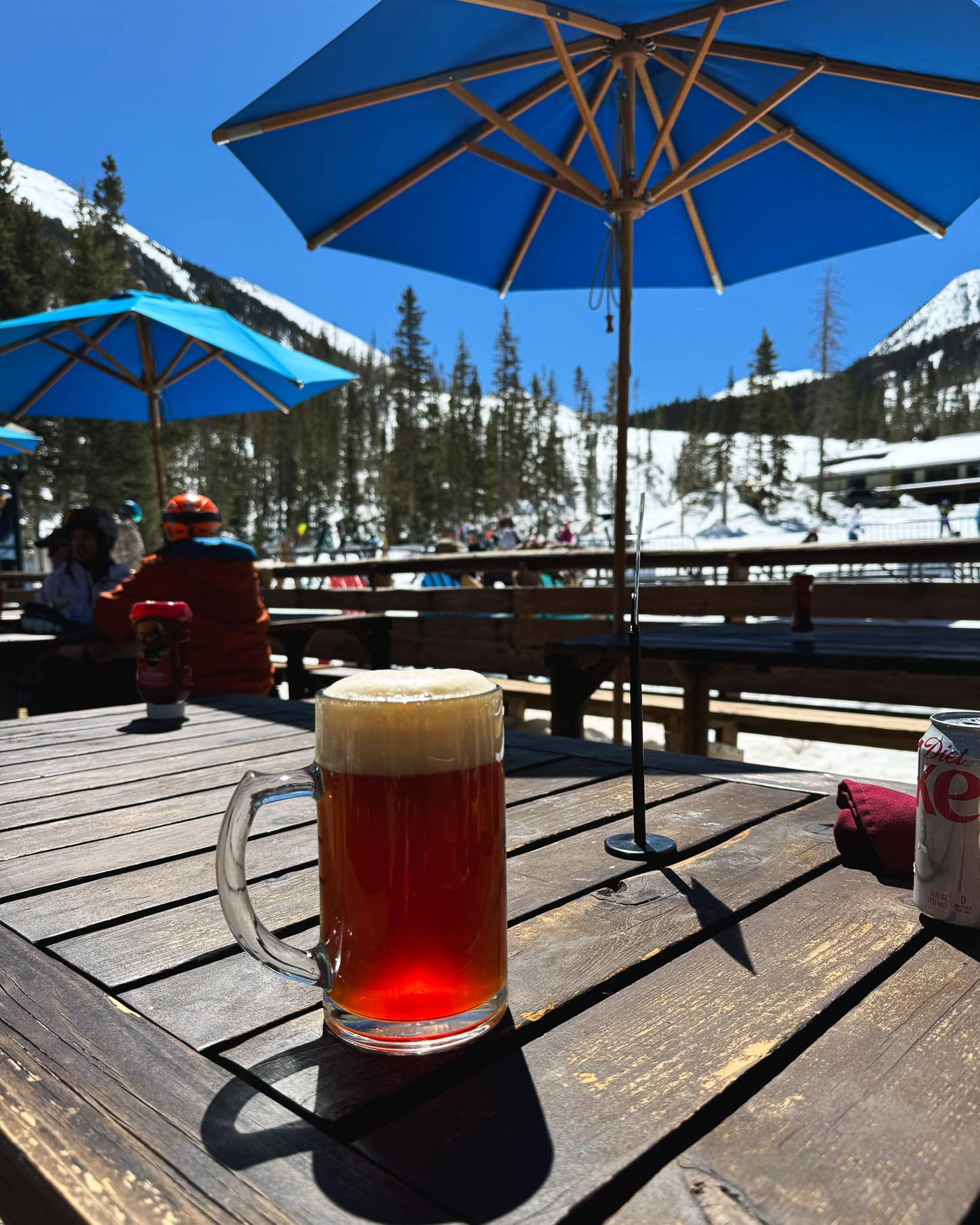
However, The Bavarian restaurant at the bottom of lift 4 is something special. While I would have loved some New Mexico cuisine on mountain, this authentic seeming German restaurant really hits with its fantastic beer pours, warm soft pretzels, and legit wursts. It was miles away from the usual plastic or aluminum cup of domestic mass market beer you’d normally see on mountain. We loved The Bavarian so much we made it a point to go all the way to lift 4 every day.
Where to stay near Taos Ski Valley
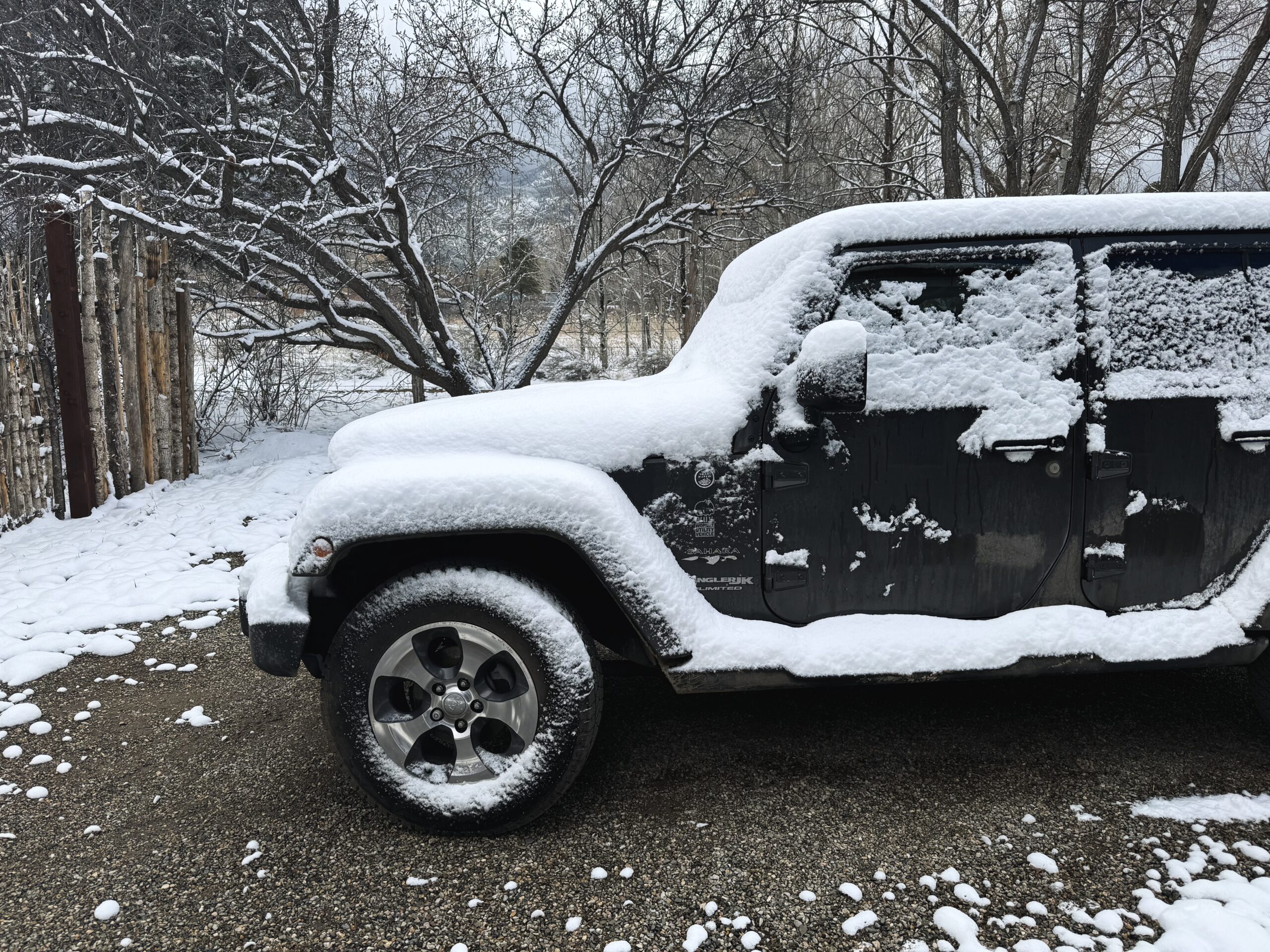
You can probably stay on mountain, but we didn’t look into it. There are lots of cute local airbnbs and hotels around the area. We stayed in Arroyo Seco which is only 18 minutes from the mountain and nearby many great restaurants. Wherever you stay, even if it’s on mountain, you’re going to need a vehicle, if only to hit up the great restaurants off-mountain. Although it’s New Mexico, that vehicle should be snow-capable, because it even snows off the mountain.
Where to eat in Taos
If you’ve made it all the way to New Mexico, staying on mountain is doing yourself a disservice. We’ve eaten our way through the entire state and everything is so good, from tamales to sopaipilla to (of course) green chile cheeseburgers.
Some of our favorites near the Taos area are:
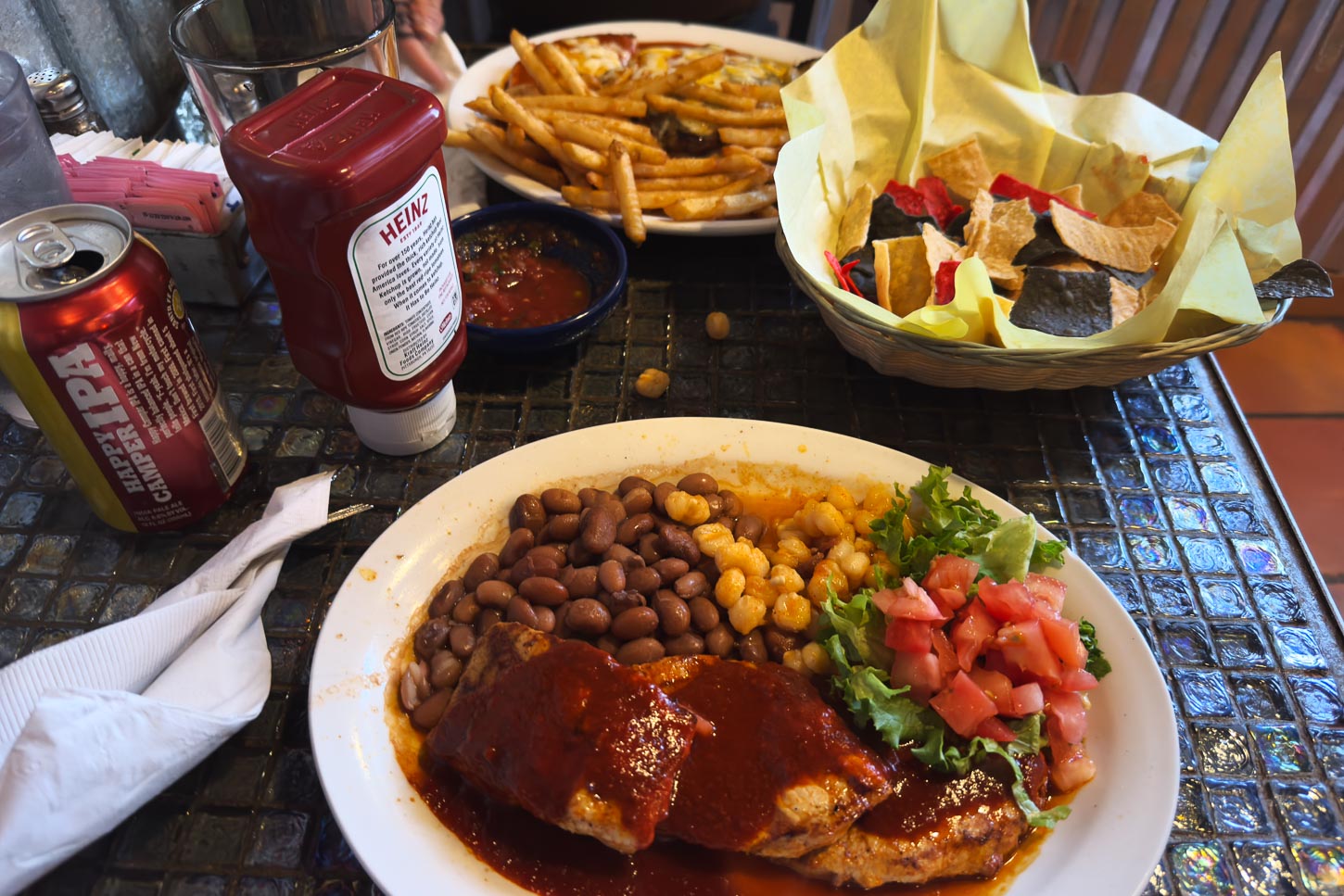
Orlando’s
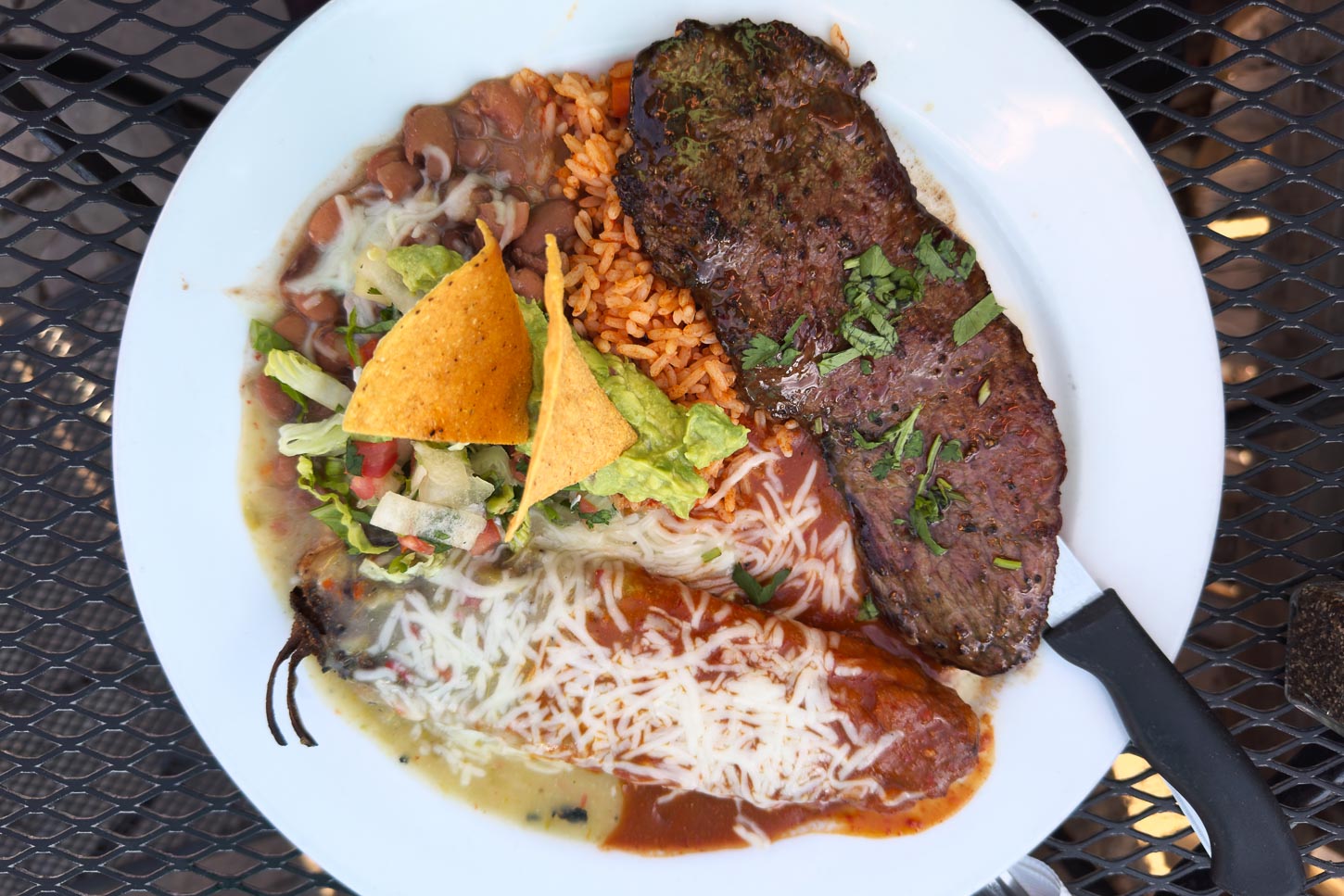
La Cueva
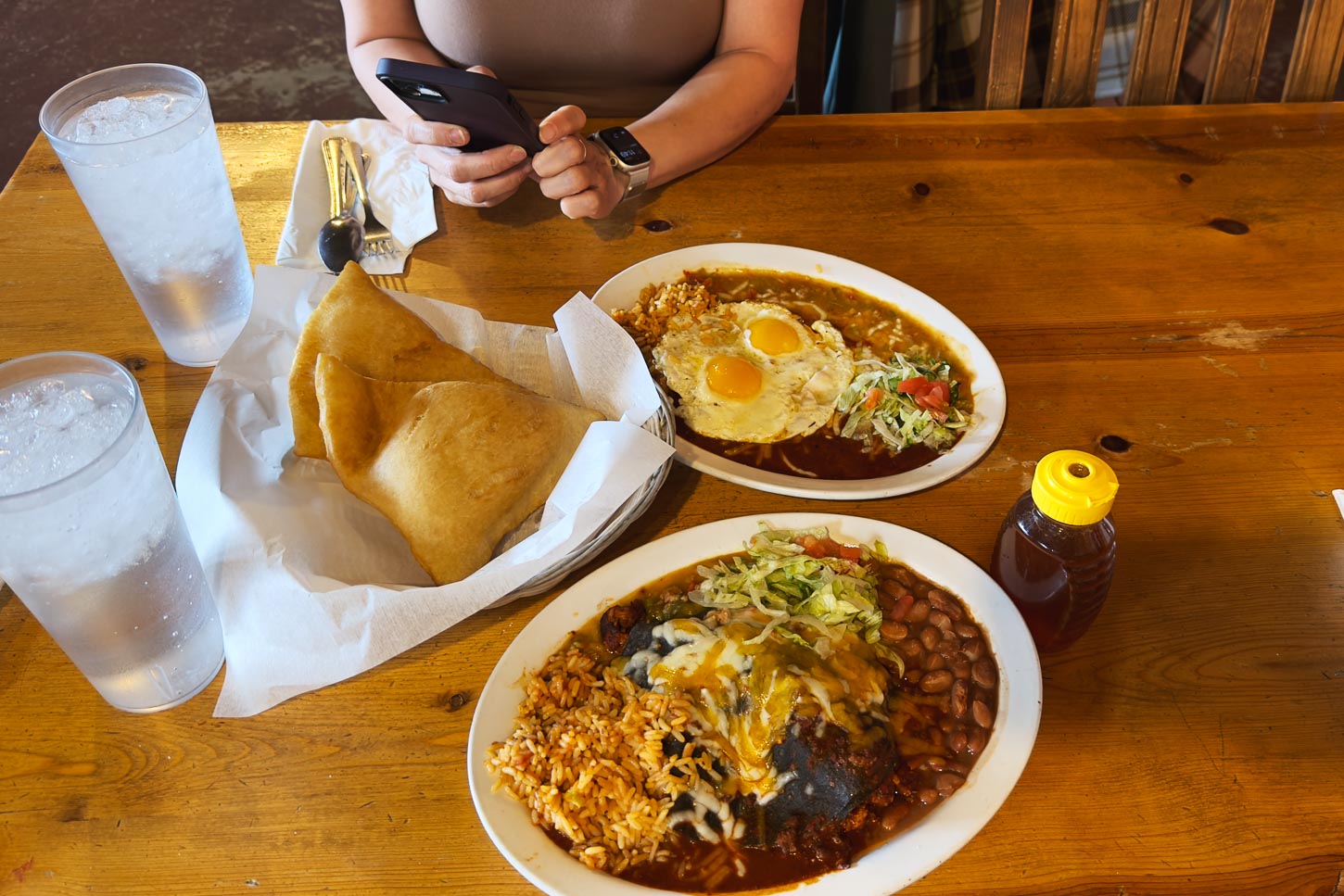
Ranchos Plaza Grill
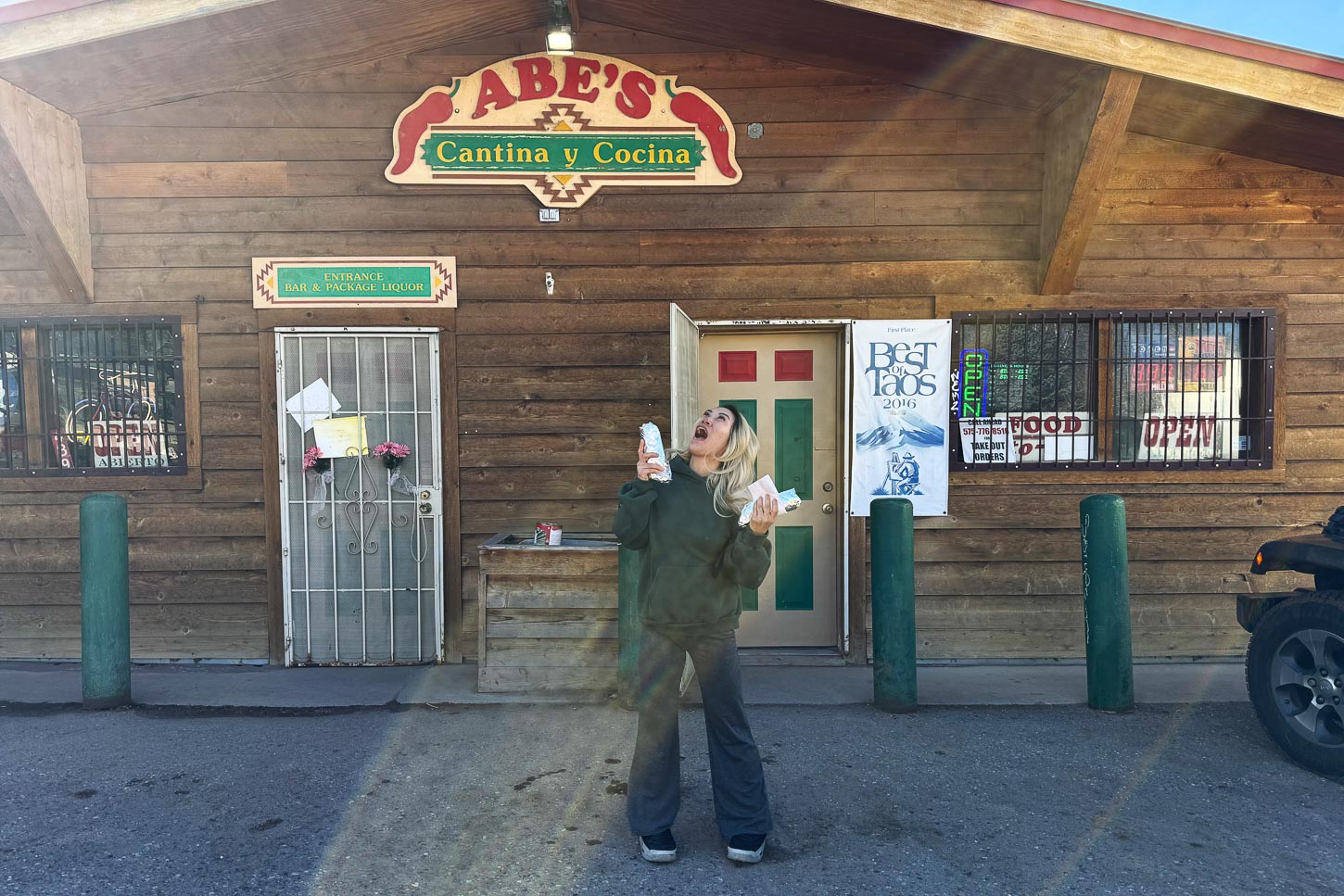
Abe’s Cantina y Cocina
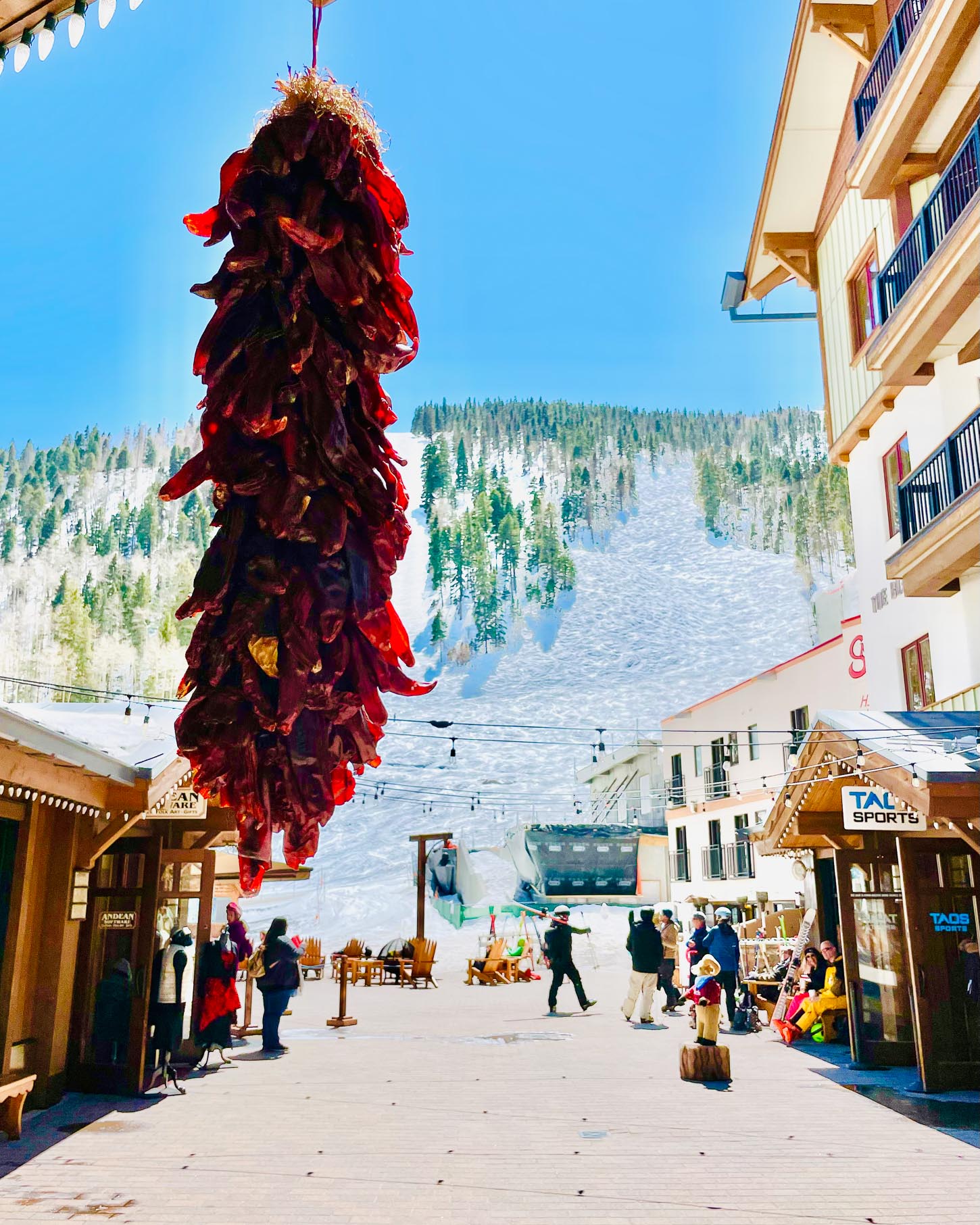
Taos Ski Valley Village
Taos’ ski village is really cool and feels just like a real small New Mexico village, which I guess it is. There are chiles drying on the porches and adobe everything. It’s a really cool vibe and it’s nice to spend a sunny afternoon enjoying one of the many local beers on one of the vast patios. It has all the usual ski village things: lodging, rentals, and lots of stickers and Christmas ornaments.
Taos Ski Valley Parking
Parking at Taos is a little quirky and a little local in that it’s all unpaved (ie muddy) and far enough away that it’s all shuttle based. While this sounds mostly normal, it should be noted that the shuttles are basically a cow trailer towed by a pickup truck. There are barely any handholds and no accessibility options.
You may be thinking: why do you need accessibility options if you’re skiing? Because if you have an injury at the end of the day, that shuttle is going to be a pain. That thankfully didn’t happen to either of us, but I was imagining it during the whole ride.
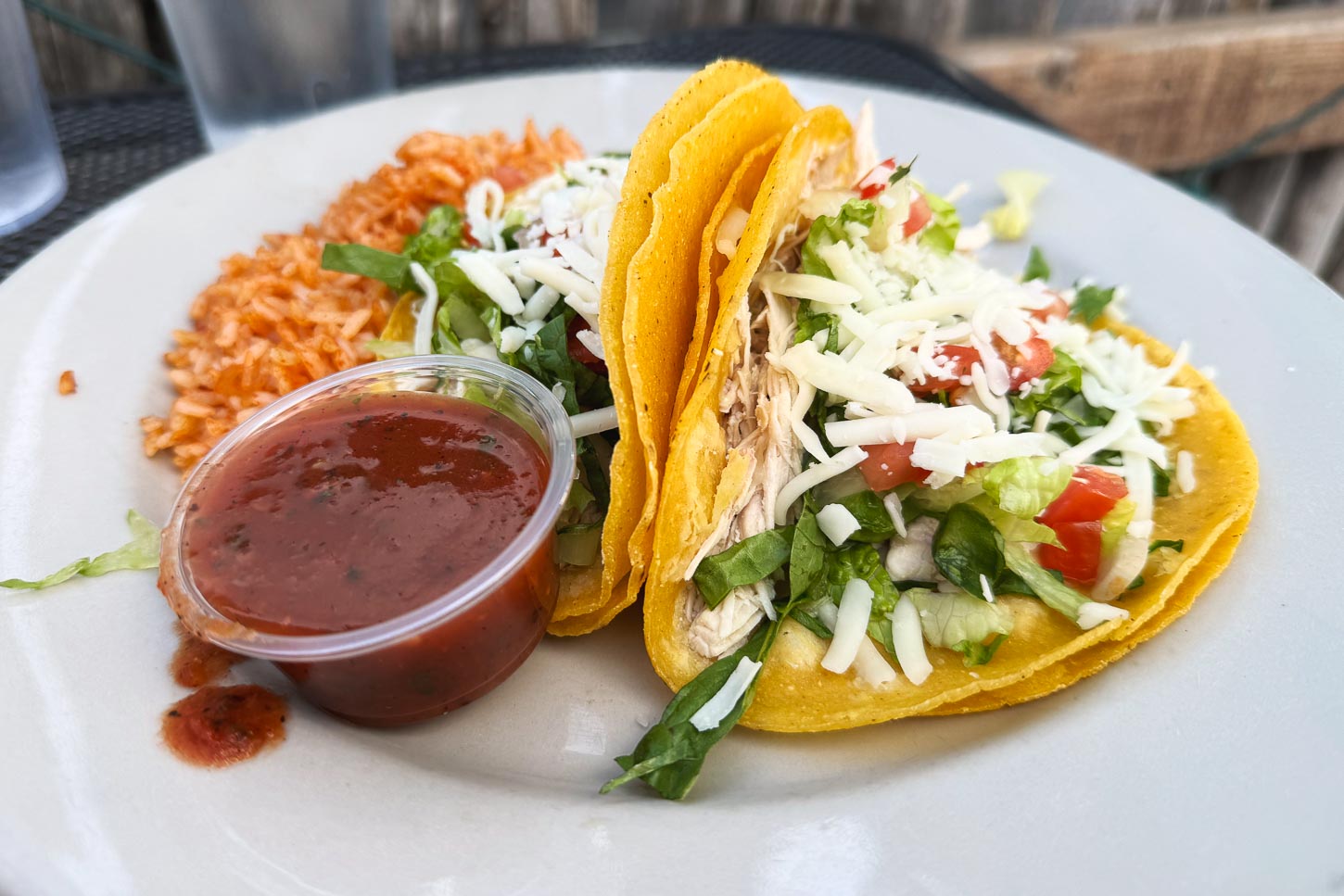
These tostadas are from La Cueva, one of our favorites.
Facts
- Avg 300″ of snowfall per year (Compare to 400″ for Whistler or 550″ for Alta)
- Avg 300 days of sunshine per year
- 1294 acres of skiiable terrain (Compare to 8171 acres for Whistler or 2614 acres for Alta)
- 13 lifts
- Base elevation: 9350ft
- Summit: 12481ft (this is really high for those who aren’t used to elevation)
- Vertical drop: 3131ft
- On the Ikon pass
Things to do
When not skiing, we love to eat our way through New Mexico. Check out our posts on:
Happy trails,
Mike