
Today I asked Mike if there was anything that could go wrong if I ate too many (Japanese) sweet potatoes in one day. He said no, and I was glad because I had already eaten three relatively large potatoes by the time I asked him. Sweet potatoes are supposed to be healthy, but I’m not convinced. How can something so sweet, tender, and delicious be good for you? Seriously, caramelized Asian sweet potatoes are dangerous.
Warning: sweet potatoes (well, potatoes in general) are my special interest, so this is a post that nerds out about Asian sweet potatoes and how they’re so very, very different than the sweet potatoes/yams we know here. Normally, we don’t go all out with the special accented characters on this blog, but this post deserves them.
Recently, I started roasting sweet potatoes in halves instead of whole. Slicing them down the middle to let the natural sugars seep out and caramelize is next level. If you’ve ever had roasted sweet potatoes, or yaki-imo, in Japan, you know how good they are. Just walking by Don Quijote, the aroma of roasting sweet potatoes is bound to draw you in.
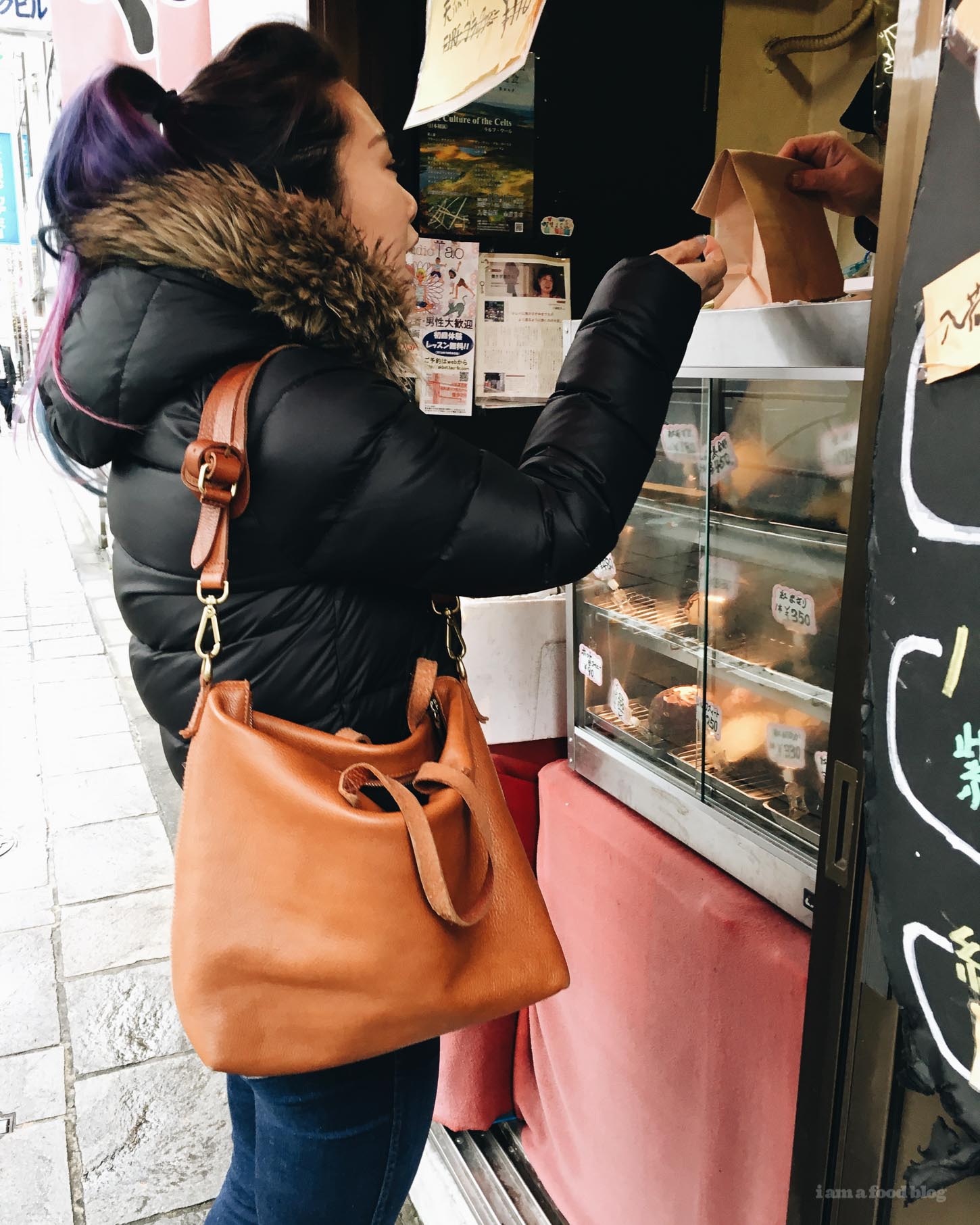
I am truly obsessed with Asian sweet potatoes and I have been ever since my very first yaki-imo in Tokyo. Since then, I’ve been chasing Asian sweet potatoes, from all over Japan to right here at home. I’m so lucky that we have such a large Asian population here because we get a lot of imported produce, including sweet potatoes straight from Asia.
On Asian sweet potatoes
Japan isn’t the only Asian country that has a love affair with sweet potatoes. In Korea, goguma, or gungoguma when roasted, are just as popular as in Japan. H Mart even sells roasted sweet potatoes ready to go. China is no stranger to sweet potatoes either. Roasted sweet potatoes there are called kǎo hóngshǔ (烤红薯).
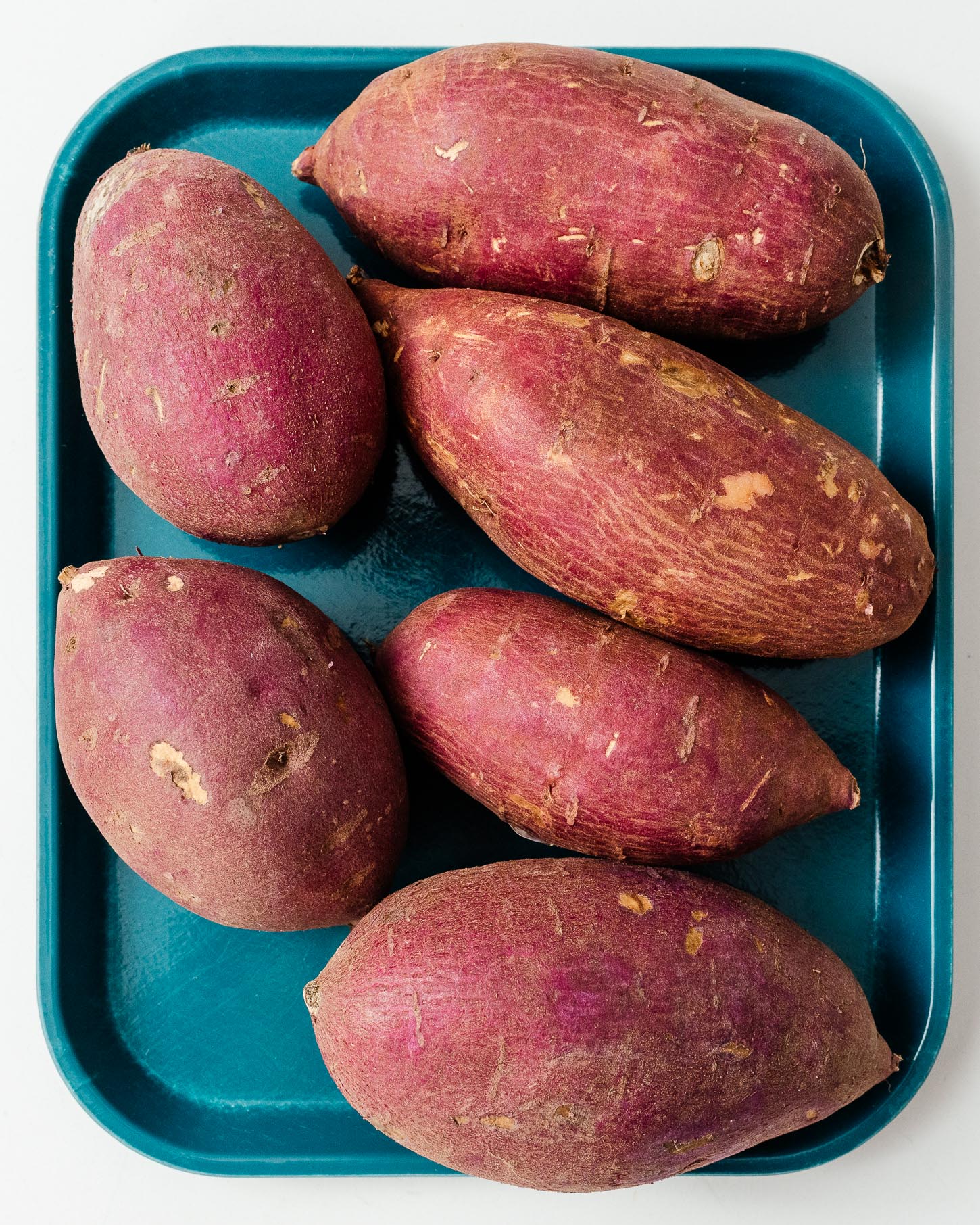
Japanese sweet potatoes vs orange sweet potatoes
Even though their purple-red outsides and pale yellow creamy insides look completely different than the orange sweet potatoes we see here in North America, they’re the same species. The orange ones sometimes get called yams at the store, and just to make things more confusing, true yams are a different vegetable altogether.
There are three main textures of Asian sweet potatoes
Some are fluffy and chestnut-like, some are moist and creamy, and some are sticky and jammy like honey. Different varieties cook up differently, so when you’re buying Asian sweet potatoes and they don’t have a cultivar listed, it’s Russian roulette as to which kind of sweet potato you’ll get.
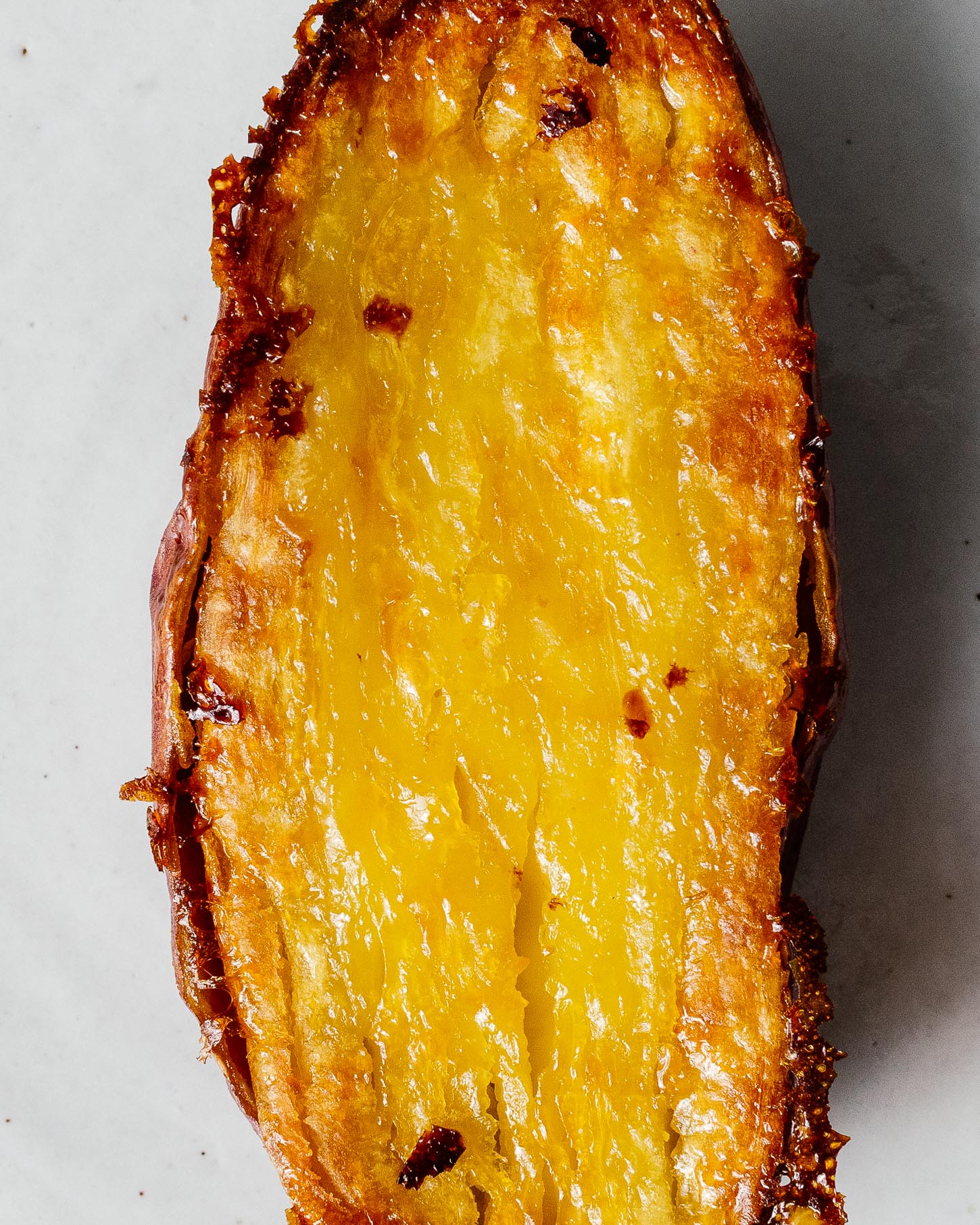
My all-time favorite Asian sweet potato is the sticky, jammy, honey-like kind. They’re dense, glossy, and almost translucent when baked properly. They’re smooth and sticky and spoonably soft.
Where to find Japanese sweet potatoes in North America
Look for Japanese sweet potatoes or satsumaimo in the produce section of a Japanese or Korean grocery store. If the bin lists the variety, Beni Haruka and Annō imo are two to look for when you want that sticky, jammy middle.
They grow Japanese-style sweet potatoes here in North America, too. The Murasaki ones I get here taste a little different from the ones I’ve had from Japan. Fun fact, Murasaki sweet potatoes were developed in Louisiana. With their purple-red exterior and creamy white insides, they look just like some of the ones from Japan.
The best way to eat Japanese sweet potatoes
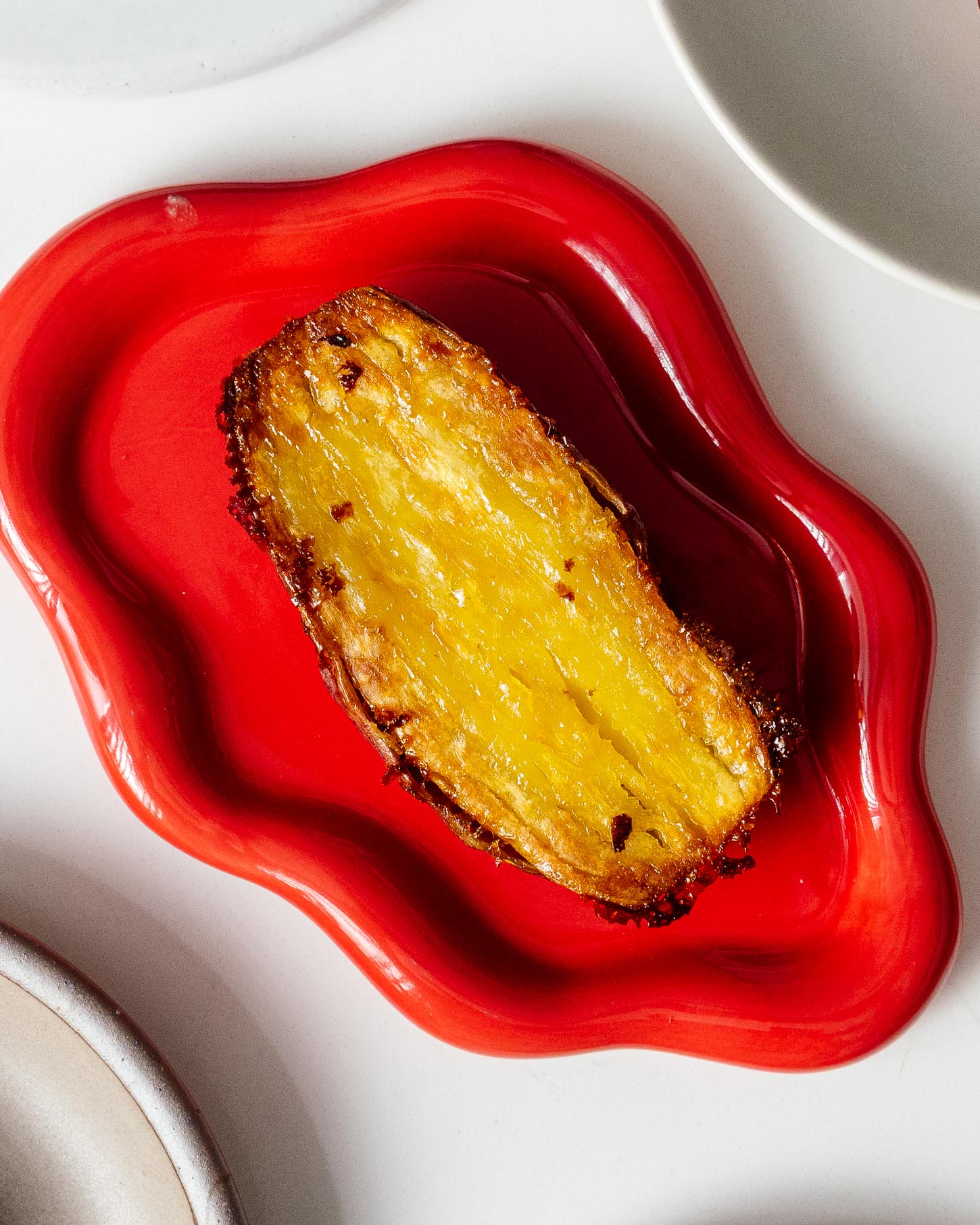
Personally, I think this is the best way to eat Japanese sweet potatoes, unless you’re in Japan. Roasting sweet potatoes cut side down lets the exposed insides come in direct contact with high heat, which makes the natural sugars caramelize into dark, sticky, chewy edges. Those edges with the tender, creamy, custard-y, jammy insides are pure heaven. If you’ve had karikari daigaku imo, the crunchy Japanese candied sweet potatoes, you’ll know how good those crisp edges are with a soft middle. When caramelized like they are in this post, they don’t even taste like vegetables. I like them straight from the oven, at room temp, from the fridge, and warmed up again.
But wait, before I end this, I have to say, I’ve been seeing more and more sweet potatoes from China popping up in grocery stores and at first I was suspicious but Mike convinced me to buy some and now I know that Chinese cultivars are just as good as the Japanese.
Specifically, I got a “marshmallow sweet potato” and it was sweet and jammy and caramelized perfectly with the right amount of moisture and silkiness.
And if you loved these
If you see any imported Asian sweet potatoes, Chinese, Japanese, or Korean, I hope you try them. They truly taste different than our orange sweet potato friends here. I love those guys too. I just love potatoes.
happy potatoing
xoxo steph
let’s make it
The recipe
Everything you need in one place. Change the servings and the amounts follow, or print it for the kitchen.

Caramelized Japanese Sweet Potatoes
How can something so sweet, tender, and delicious be good for you?
Serves 6
- 6 Japanese sweet potatoes about the same size
- 2 tbsp neutral oil
Nutrition Facts
Caramelized Japanese Sweet Potatoes
Amount Per Serving
Calories 270 Calories from Fat 50
% Daily Value*
Fat 5.6g9%
Saturated Fat 0.5g3%
Cholesterol 0.01mg0%
Sodium 41mg2%
Potassium 684mg20%
Carbohydrates 60g20%
Fiber 5g21%
Sugar 32g36%
Protein 1.6g3%
* Percent Daily Values are based on a 2000 calorie diet.