
Tiramisu will forever be one of my favorite desserts. When I see it on a menu, I have to have it. Whenever we go to an Italian place, I always ask to see the dessert menu before ordering because I need to know how much room to save. Part of the reason I love tiramisu so much is because Mike and I have been ordering the same one since 2008 at our favorite local pizza place. Well, at least we used to, RIP in peace pizza place. The other reason is, well, it’s tiramisu.
Tiramisu is an expensive way to end every meal. I mean, I’ve even seen tiramisu go for upwards of $20. The older I get, the more I turn into that meme: we have tiramisu at home! Making tiramisu isn’t really too difficult, the hardest part is waiting for all the flavors to meld and coalesce.
If you know Japanese wagashi aka classic Japanese confections, then you know warabimochi. Warabimochi is classically served with kinako and kuromitsu, which is what inspired this tiramisu.
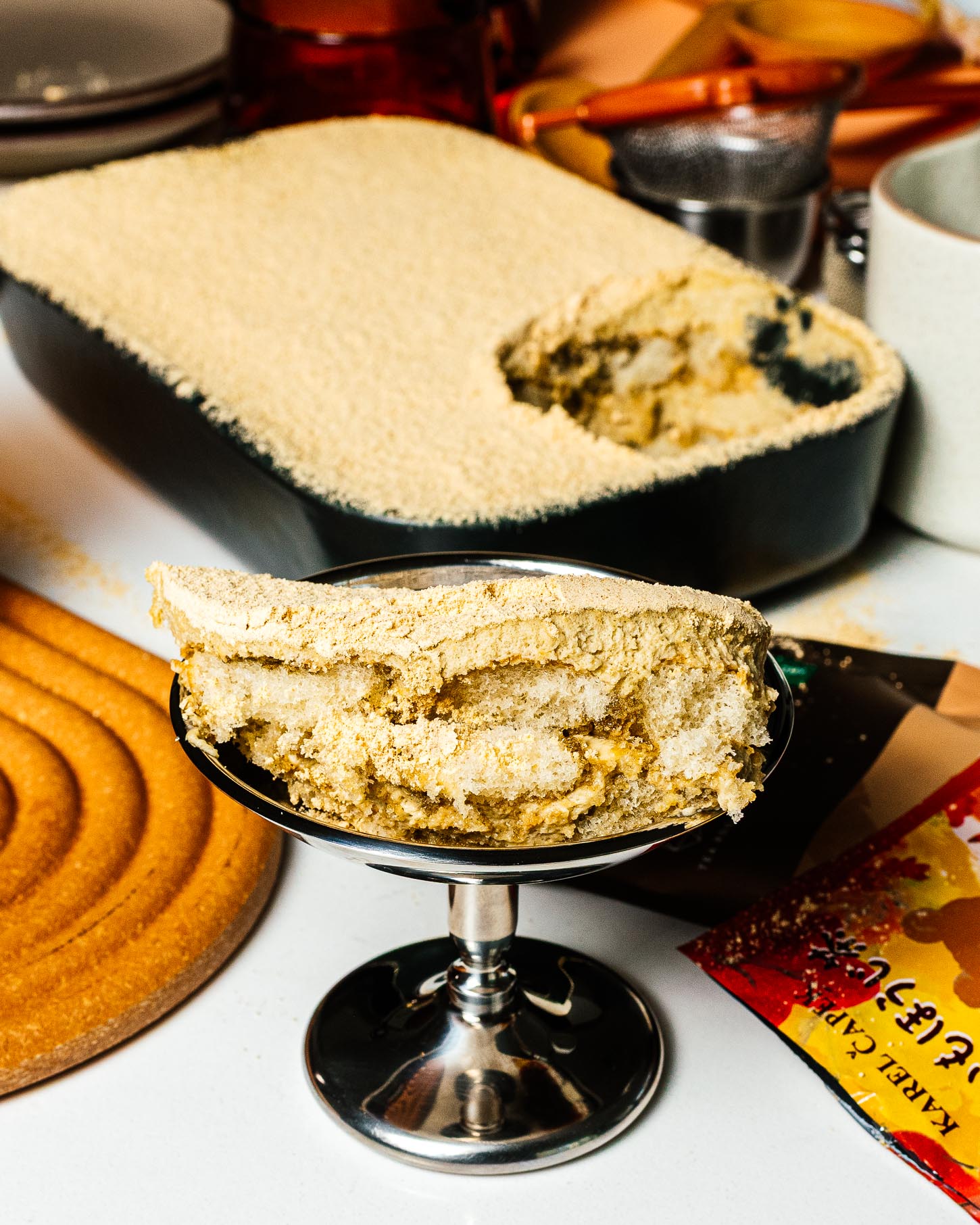
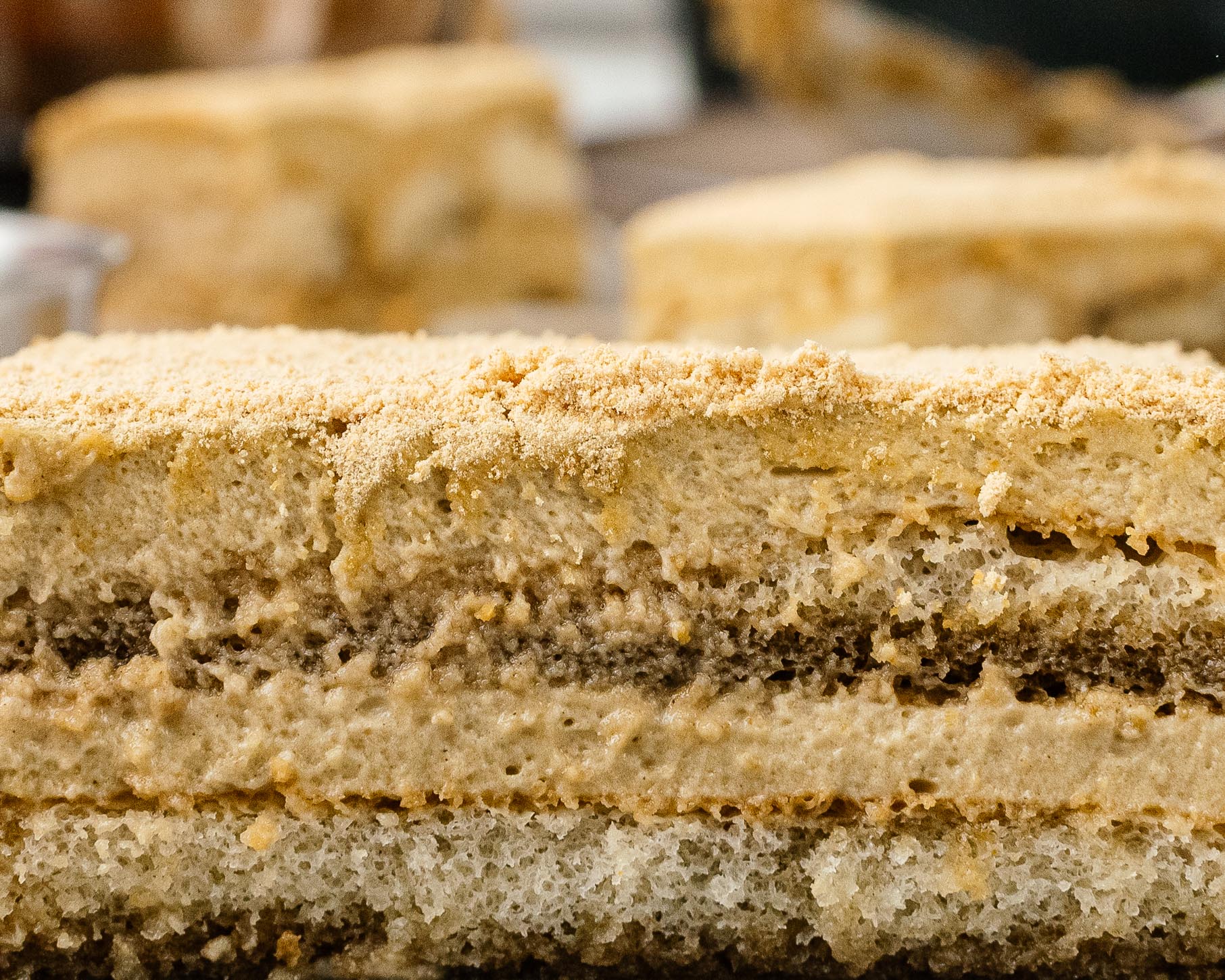
This tiramisu is sweet and toasty, creamy and soft, and everything a tiramisu should be, but with a little Japanese twist thanks to hojicha, kinako and kuromitsu. Think classic tiramisu, but instead of coffee and cocoa, you get layers of roasted tea, toasted soybeans, and caramel.
Small batch and make ahead
The best part about this tiramisu is that it’s a small batch (anyone who’s read this blog knows about my love for small batch) and you can make it the day before. No baking, no last minute dessert panic, just a little kinako dusted on top and you’re done.
Ingredients
Matcha tiramisu is what most people think of when they think Japanese + Italian dessert involving ladyfingers (which happens more often than you’d think). Hojicha is matcha’s slightly less popular cousin. Hojicha is roasted green tea, so its flavor is warm, nutty, and almost caramel-like rather than bright and grassy. Use pure, unsweetened, finely ground hojicha powder, not a sweetened latte mix, it goes into both the cream and the dipping liquid.
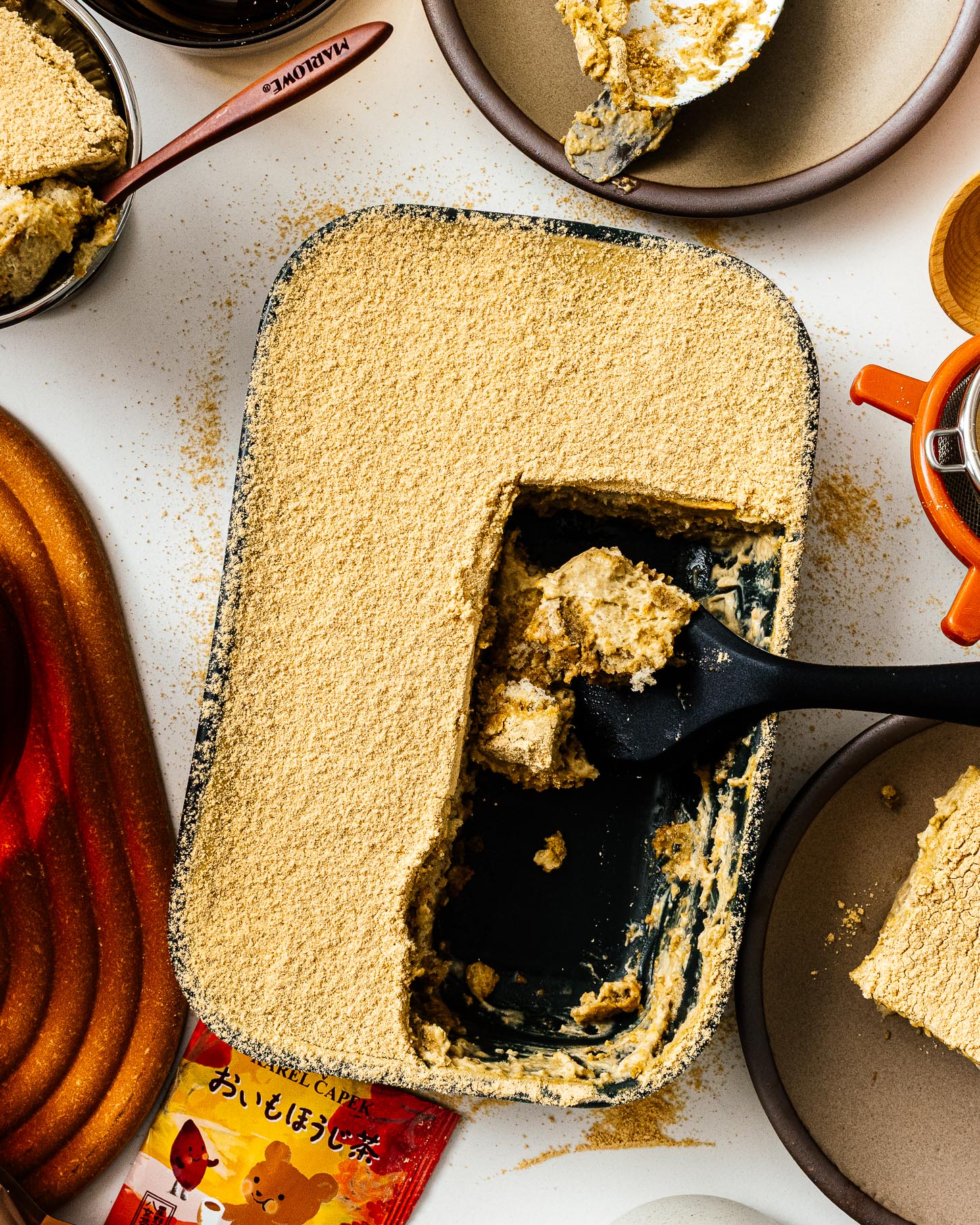
Pair that with kinako, a nutty, slightly earthy toasted soybean powder. Plain kinako isn’t sweetened on its own. Together with kuromitsu (a rich Japanese black sugar syrup) they make a tiramisu that’s deeply toasty, creamy, and just sweet enough.
A Japanese grocery store is your best bet for all three ingredients, but a well-stocked Asian grocery store might have them too. Look for hojicha powder in the tea aisle and kinako and kuromitsu near the Japanese sweets and baking ingredients.
Substitutions
Hojicha powder: There isn’t a great substitute if you want that roasted tea flavor, and the sweetened hojicha latte mixes won’t work. If your grocery store doesn’t carry this, any specialty tea place (especially an Asian one) should have this though. And of course, online is your best bet.
Kinako: Look for a bag labeled roasted soybean flour, it’s the same thing. It’s often available online. If you can’t find it at all, finely ground toasted sesame seeds could give you a little of that nutty flavor instead.
Kuromitsu: Kuromitsu can be hard to find locally without a good Japanese supermarket nearby, but it’s also online. You can make something similar with a dark brown sugar and water. Simmer equal parts until you have a syrup, let it cool, then use it in place of the kuromitsu. It won’t have quite the same deep flavor, but it’ll get you close.
How to make hojicha tiramisu
Smooth the mascarpone
Take it out of the fridge briefly, then stir gently until smooth. Set aside while you make the egg mixture.
Make the zabaglione
Whisk the egg yolks, kuromitsu, and half the sugar until light and fluffy, then sift in the hojicha and kinako. Set the bowl over a saucepan with about 2 inches of simmering water, making sure the bowl doesn’t touch the water. Whisk continuously until thick, frothy, and falling from the whisk in ribbons, about 10 minutes. The mixture should reach 160°F on an instant-read thermometer.
Fold in the mascarpone
Take the bowl off the heat and let the egg mixture cool until it’s barely warm, not hot. Fold it gently into the smooth mascarpone.
Whip the cream
Whip the heavy cream, adding the remaining sugar gradually, until you have medium peaks. They should stand up and curl over, like a soft serve cone. Gently fold the whipped cream into the mascarpone mixture.
Make the hojicha dip
Sift the hojicha powder into a shallow bowl, whisk with the hot water until smooth, then add the room-temperature water and kuromitsu. Let cool completely.
Dip the ladyfingers
Give each one a quick dip, 1-2 seconds per side, flipping once. They should still hold their shape. Fit them snugly into the bottom of your dish, breaking or trimming them if needed. Whisk the hojicha dip every so often so the powder doesn’t settle.
Layer and chill
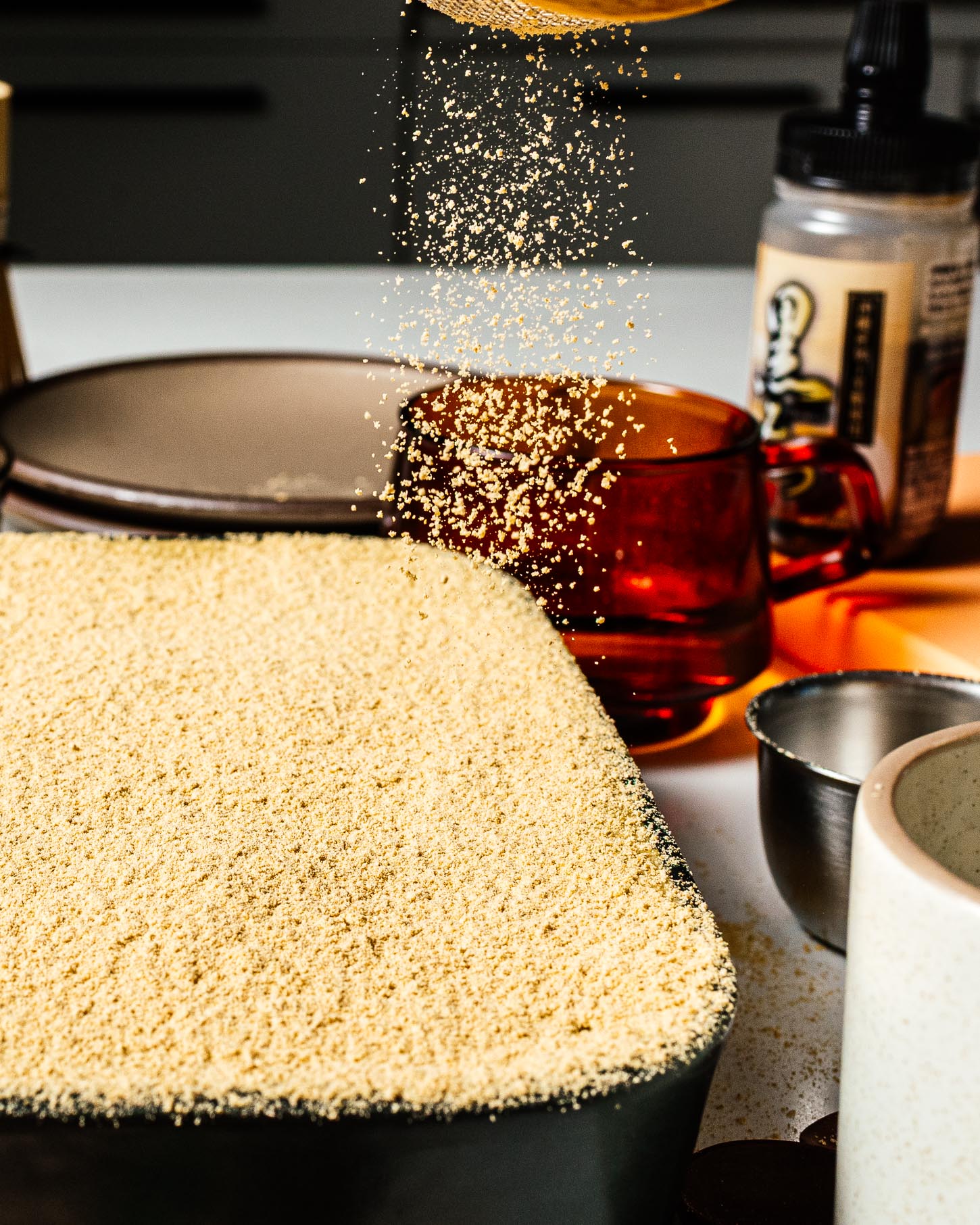
Spread half the mascarpone cream over the ladyfingers, add another layer of quickly dipped ladyfingers, then finish with the remaining cream. Cover and refrigerate overnight (or for at least 6 hours). Sift kinako over the top just before serving.
Troubleshooting/FAQ
Can I use loose leaf hojicha instead of hojicha powder?
You can make a strong hojicha tea for dipping the ladyfingers, but you’ll still need the powder for the mascarpone cream. Adding brewed tea to the cream will make it too watery, so I’d stick with hojicha powder if you can find it.
Are the egg yolks raw?
Nope, the egg yolks cook gently over the simmering water while you whisk the zabaglione. Just make sure they reach 160°F on your thermometer.
Why is my tiramisu soggy?
The ladyfingers might have soaked up too much hojicha. They really only need a quick dip because they’ll keep getting softer as the tiramisu sits in the fridge. If yours is already a little soggy, just scoop it into bowls instead of slicing it, it’ll still be delicious.
Why is the mascarpone cream runny?
The mascarpone cream might be a little runny if it doesn’t get the full fridge rest. Other reasons could be that the zabaglione could have been still too warm when it met the mascarpone or your whipped cream may not have reached medium peaks. It’ll still taste good though!
Why is the cream grainy?
The cream can get a little grainy if the mascarpone is mixed too much or if the egg mixture is still too warm. Make sure your mascarpone is nice and smooth before you start, and fold everything together gently. If it’s already grainy, don’t keep whipping it, that can make it worse.
Why is my hojicha clumpy or settling?
Hojicha powder can be a little stubborn. Sift it first and mix it with the hot water before adding the rest. If it keeps sinking to the bottom, give the hojicha a quick whisk between dipping the ladyfingers.
Make ahead and storage
This is actually better the next day, so you can make it ahead and forget about dessert until it’s time to eat. Keep it covered in the fridge and wait until just before serving to dust it with kinako. Leftovers will keep for 2-3 days in the fridge, although the ladyfingers will get softer the longer it sits.
If you love Japanese desserts
This recipe is close enough to the original to be recognizable yet different enough to be a standout dessert. Skip dessert at the restaurant because dessert at home is just as good. Maybe even better because you can enjoy it in your cozy home clothes, snuggled up on the couch, with no one to judge you for eating the entire pan.
tea-ramisu!
xoxo steph
let’s make it
The recipe
Everything you need in one place. Change the servings and the amounts follow, or print it for the kitchen.
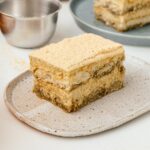
Hojicha Tiramisu
This tiramisu is sweet and toasty, creamy and soft, and everything a tiramisu should be.
Serves 6
Kinako Mascarpone Cream
- 2/3 cup mascarpone cheese
- 2 large egg yolks
- 2 tbsp sugar divided
- 1 tbsp kuromitsu
- 1 tsp hojicha powder finely ground, pure unsweetened
- 1 tbsp kinako
- 1/2 cup heavy cream
Assembly
- 1 tbsp hojicha powder finely ground, pure unsweetened
- 2 tbsp water hot
- 1/2 cup water room temperature
- 1 tbsp kuromitsu
- 12-16 ladyfingers enough for 2 layers in your dish
- 1 tbsp kinako to finish
-
1 4×8 or 6×6 pan
-
Take the mascarpone out of the fridge, put it in a bowl, and let sit at room temperature briefly. Gently stir to ensure it is smooth. Set aside.
-
Make the zabaglione: In a large, heatproof metal bowl, whisk the egg yolks, kuromitsu, and 1 tbsp sugar until light and fluffy. Sift in the hojicha powder and kinako, whisking until smooth.
-
Bring a small saucepan, with about 2 inches of water, to a simmer over medium-high heat. Make sure the bottom of the metal bowl doesn’t touch the water and place it on top of the simmering water to make a double boiler.
-
Whisk continuously over the simmering water until the zabaglione is thick, creamy, and frothy, about 10 minutes. Use an instant-read thermometer to make sure it reaches 160°F. When ready, the zabaglione will fall from the whisk in ribbons that briefly hold their shape. When done, remove the bowl from the double boiler. Let cool slightly so the sides of the bowl are barely warm, not at all hot.
-
Fold the mascarpone and zabaglione: Carefully pour the barely warm zabaglione into the bowl with the mascarpone. Gently fold with a spatula until smooth and creamy. Set aside.
-
Whip the cream: Add the heavy cream to the bowl of a stand mixer and whip on medium until slightly foamy. Slowly stream in 1 tbsp sugar and whip until medium peaks form: soft but still able to hold its shape. When you lift the whisk out of the cream, the peak should be defined yet fold back on itself, like a classic soft serve cone.
-
Fold: When the whipped cream is at medium peaks, add it to the bowl with the mascarpone and zabaglione. Fold with a silicone spatula until smooth and completely combined. Set aside.
-
Dip the ladyfingers: Sift the hojicha into a shallow bowl large enough to fit the ladyfingers. Add the 2 tbsp hot water and stir until smooth. Whisk in the 1/2 cup room temperature water and kuromitsu until combined. Let cool completely before dipping the ladyfingers.
-
Dip the ladyfingers, one by one, into the hojicha for 1-2 seconds per side, flipping once, then immediately place in the bottom of a 8×4 inch pan (I used a 9×6 pan, making my tiramisu not as tall). Whisk the hojicha every so often to ensure the powder is evenly distributed. Repeat until the bottom layer is filled.
-
Add 1/2 of the mascarpone cream to the top of the soaked ladyfingers and use an offset spatula to smooth out the cream.
-
Dip the remaining ladyfingers and place on the mascarpone mix in a single layer, then add the remaining cream on top, spreading it out evenly with an offset spatula.
-
Cover and refrigerate overnight, or for at least 6 hours, to set.
-
To serve: remove from the fridge and just before serving, generously sift kinako over the top. Scoop or slice and enjoy.
Nutrition Facts
Hojicha Tiramisu
Amount Per Serving
Calories 310 Calories from Fat 198
% Daily Value*
Fat 22g34%
Saturated Fat 14g88%
Cholesterol 133mg44%
Sodium 36mg2%
Potassium 200mg6%
Carbohydrates 24g8%
Fiber 1.2g5%
Sugar 17g19%
Protein 5g10%
* Percent Daily Values are based on a 2000 calorie diet.