
These homemade dinner rolls are flaky, soft, and buttery. Made with just 7 ingredients, they’re a delicious addition to any meal. Even beginning bakers can master this easy recipe!

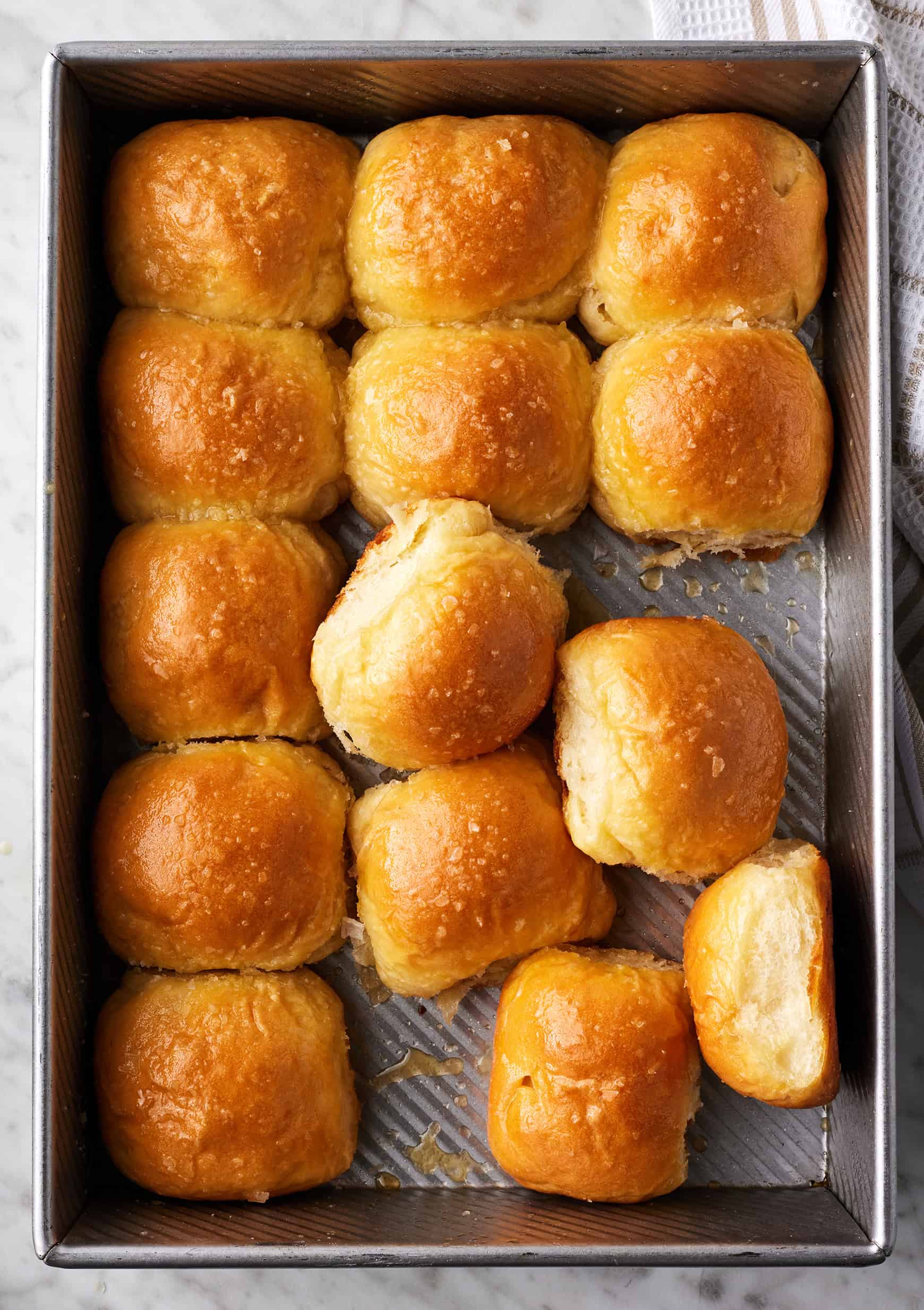
These homemade dinner rolls are a perfect addition to almost any meal. Fluffy, soft, and buttery, they’re delicious alongside a humble bowl of soup or a full spread of Thanksgiving recipes. We even love them on their own with honey butter or jam!
My husband Jack started making these dinner rolls several years ago, and they’ve been a fixture in our rotation ever since, especially for holidays.
We keep coming back to them because they’re so simple. You only need 7 basic ingredients to make this easy dinner roll recipe! Even if you’re new to baking, you can pull this one off.
Keep reading for step-by-step photos, our best recipe tips, and instructions for making the rolls ahead of time. It won’t be long before you’re pulling these pillowy, golden brown rolls out of the oven!
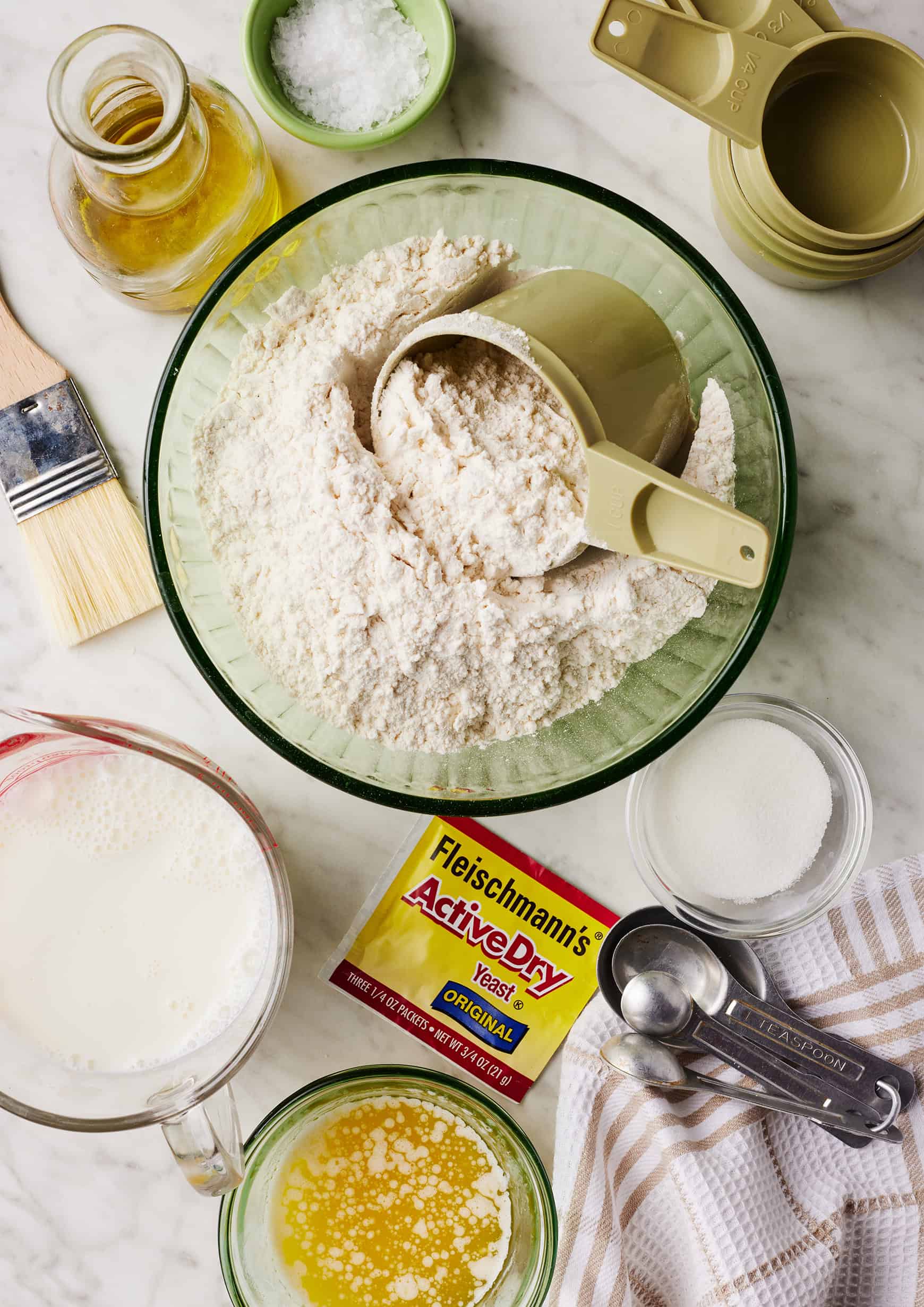
Dinner Roll Recipe Ingredients
You only need 7 ingredients to make this recipe:
- All-purpose flour – One of my best tips for making this dinner rolls recipe is to measure your flour carefully. If you have a kitchen scale, weigh it. If you don’t, spoon and level your flour instead of scooping it up with your measuring cup. You don’t want to accidentally add too much flour to the dough!
- Yeast – We typically use active dry yeast, but instant yeast will work here too. I still recommend proofing it with the milk and sugar before mixing up the dough.
- Milk – Any kind you like! Whole milk adds richness to the dough, which gives the rolls an especially soft and fluffy texture. That said, we’ve had great results with almond milk too.
- Sugar – It activates the yeast and gives the rolls a touch of sweetness.
- Melted butter – You’ll add some to the dough and brush more on top of the rolls.
- And sea salt – To round out the sweet and savory flavor.
You’ll also need olive oil for brushing. It prevents the dough from sticking to the bowl and baking sheet!
Find the complete recipe with measurements below.
Variation
Make the rolls vegan. Use your favorite non-dairy milk and vegan butter. Omit the salt if your vegan butter is salted.
How to Make Homemade Dinner Rolls
You can find the complete dinner rolls recipe with measurements at the bottom of this post. For now, here’s a step-by-step overview of how it goes:
First, proof the yeast. Combine it with the warm milk and 1 tablespoon sugar, and let it sit for 5 minutes. After 5 minutes, the yeast should be foamy. If it’s not, discard the mixture and start again. There’s a good chance your yeast wasn’t fresh!
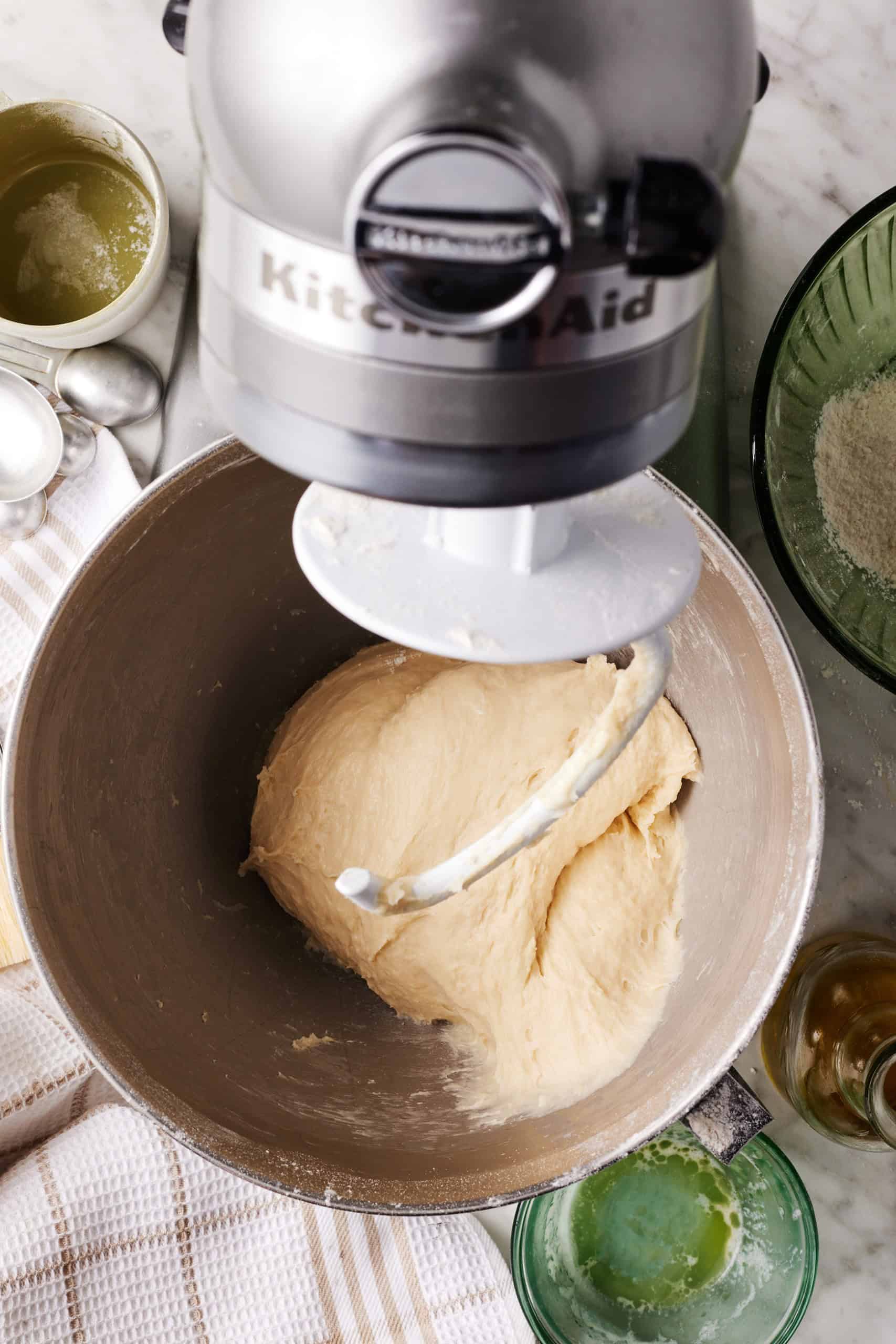
Next, make the dough. Add the foamy yeast mixture, the remaining sugar, melted butter, and salt to the bowl of a stand mixer fitted with a dough hook. Mix on low speed to combine.
Add the flour 1 cup at a time, mixing after each addition. Increase the speed to medium and mix until a cohesive, sticky dough forms around the hook, about 2 minutes. It should be pulling away from the bottom and slapping the sides of the bowl.
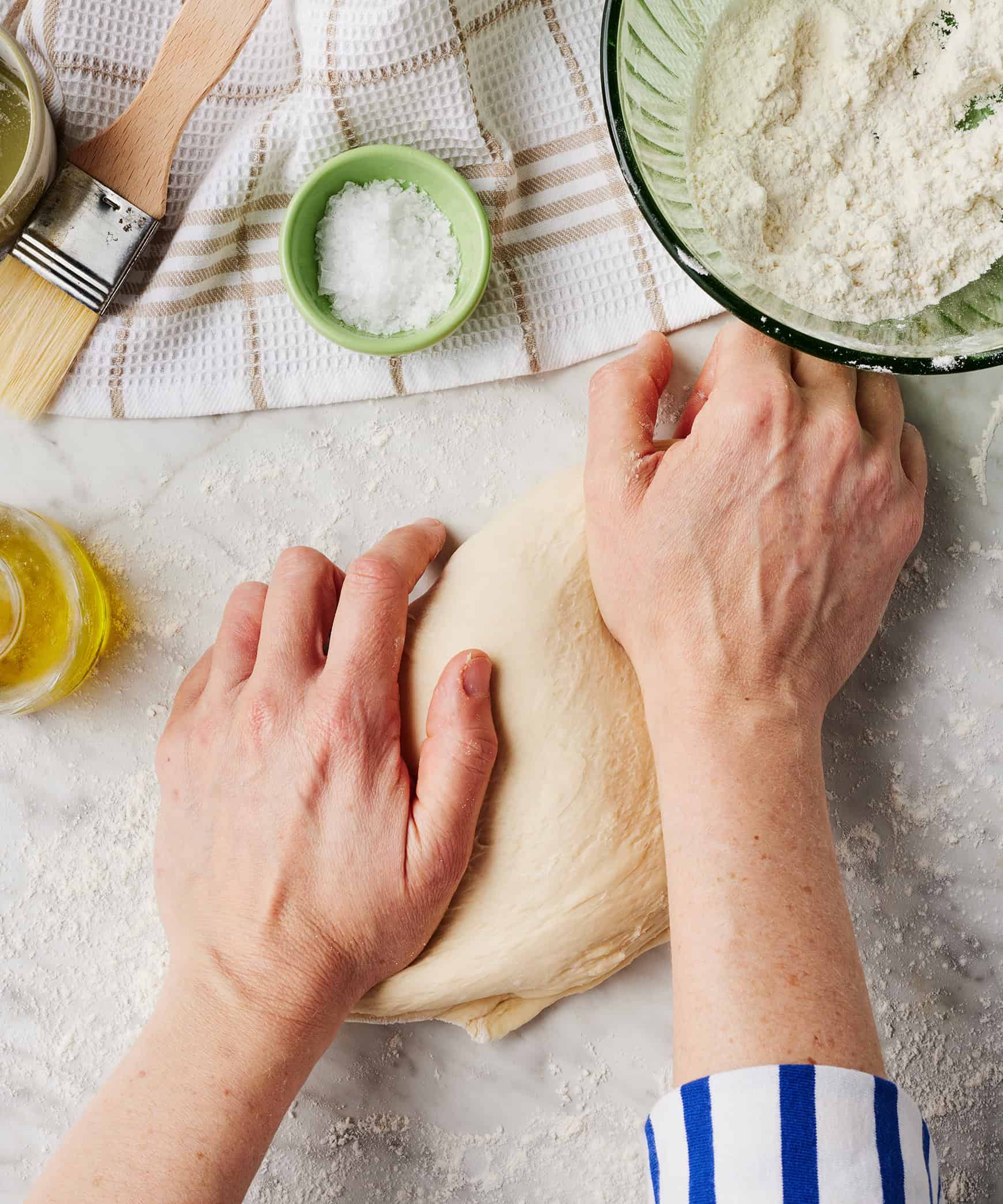
Transfer the dough to a floured work surface, and knead a few times to form it into a ball.
Can I make these without a stand mixer?
Yes, you can make this recipe without a stand mixer. After proofing the yeast, use a wooden spoon to mix together the dough in a large mixing bowl. Once a sticky dough forms, sprinkle it with a bit of flour and knead the dough in the bowl for 4 to 5 minutes, or until the dough becomes elastic and pulls cleanly away from the sides of the bowl.
The dough will be very sticky at first, but only add as much flour as you need to make it workable.
Then, rise! Place the dough ball in an oiled bowl. Cover the bowl with plastic wrap. Let the dough rise for 1 to 2 hours, or until it doubles in size.
How to Shape Dinner Rolls
After the dough rises, shape the rolls.
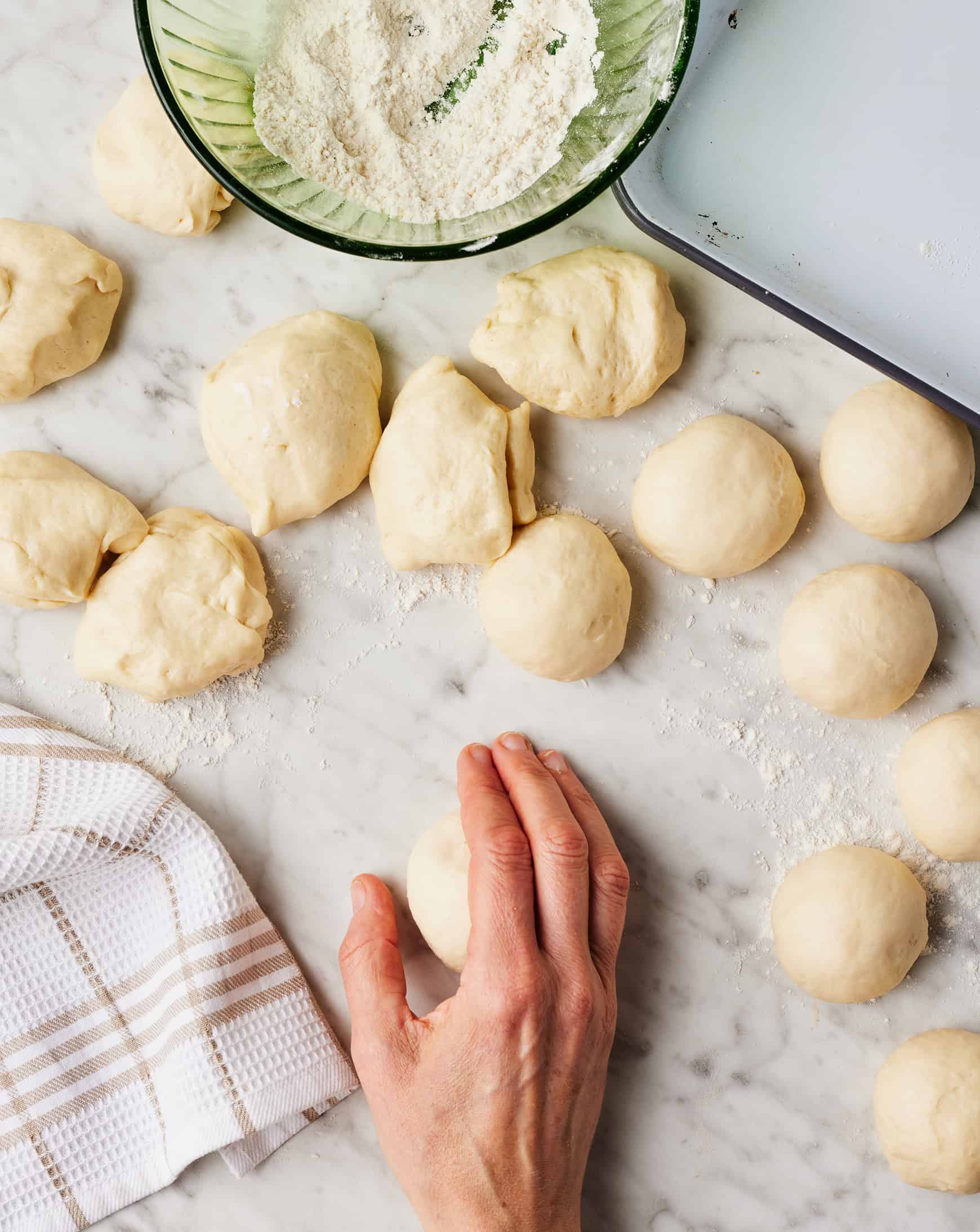
Step 1: Start by dividing the dough into 15 equal pieces. The most precise way to do this is by weighing the dough. Use a kitchen scale to weigh the full ball, then divide that number by 15 to figure out how much dough to use for each roll (usually about 49 grams). If you don’t have a scale, you can form the dough into a rectangle and cut it into a grid shape to make the pieces as close in size as possible.
Step 2: Shape the dough into balls. Roll each piece on the counter under your cupped hand until it’s smooth and round. Shaping the rolls this way helps them rise with an even, puffy shape.
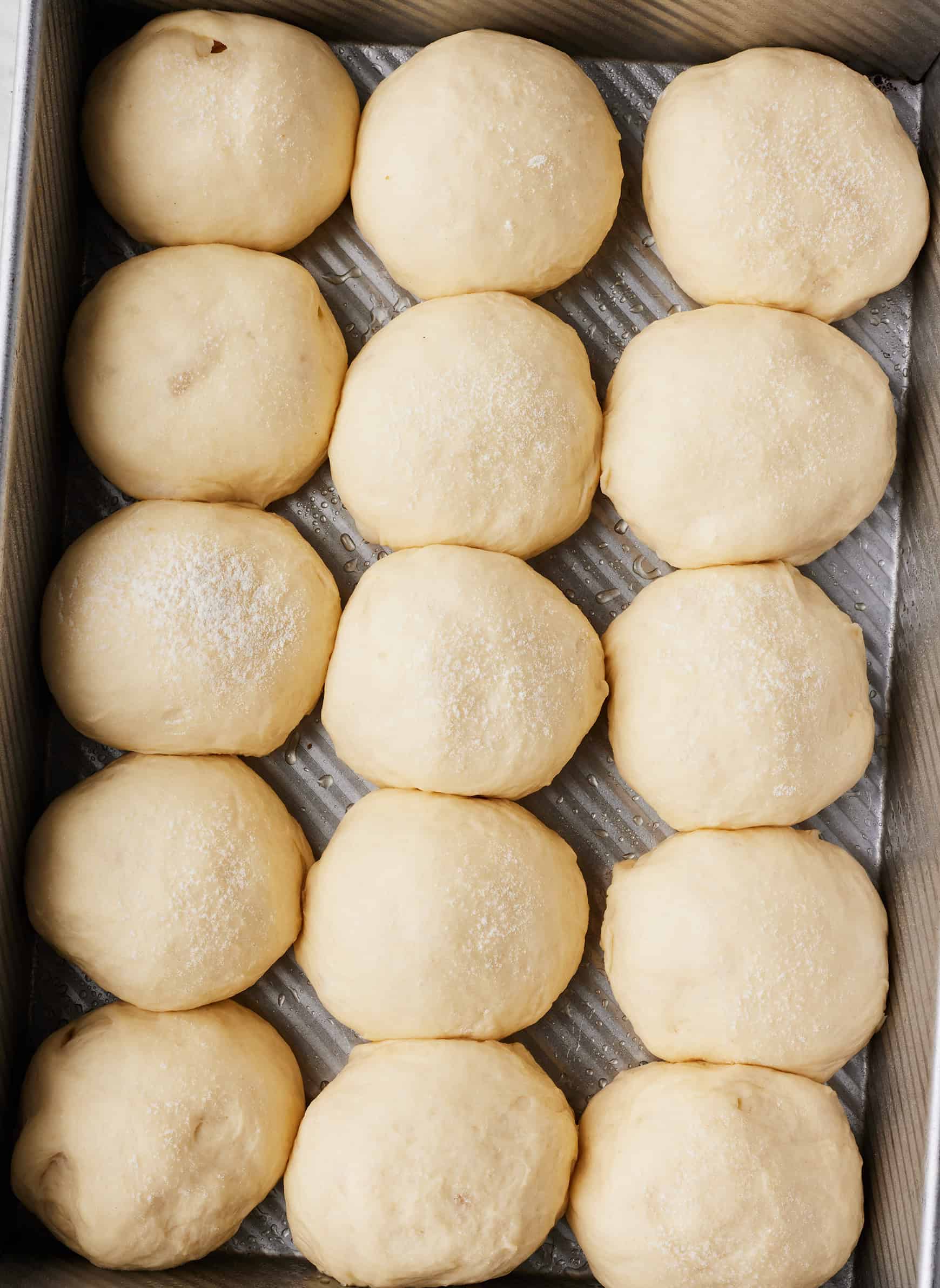
After shaping, let the rolls rise again. Transfer them to a greased quarter sheet pan or 9×13-inch baking dish. Dust with flour, cover with plastic wrap, and let rise for another hour, or until puffy.
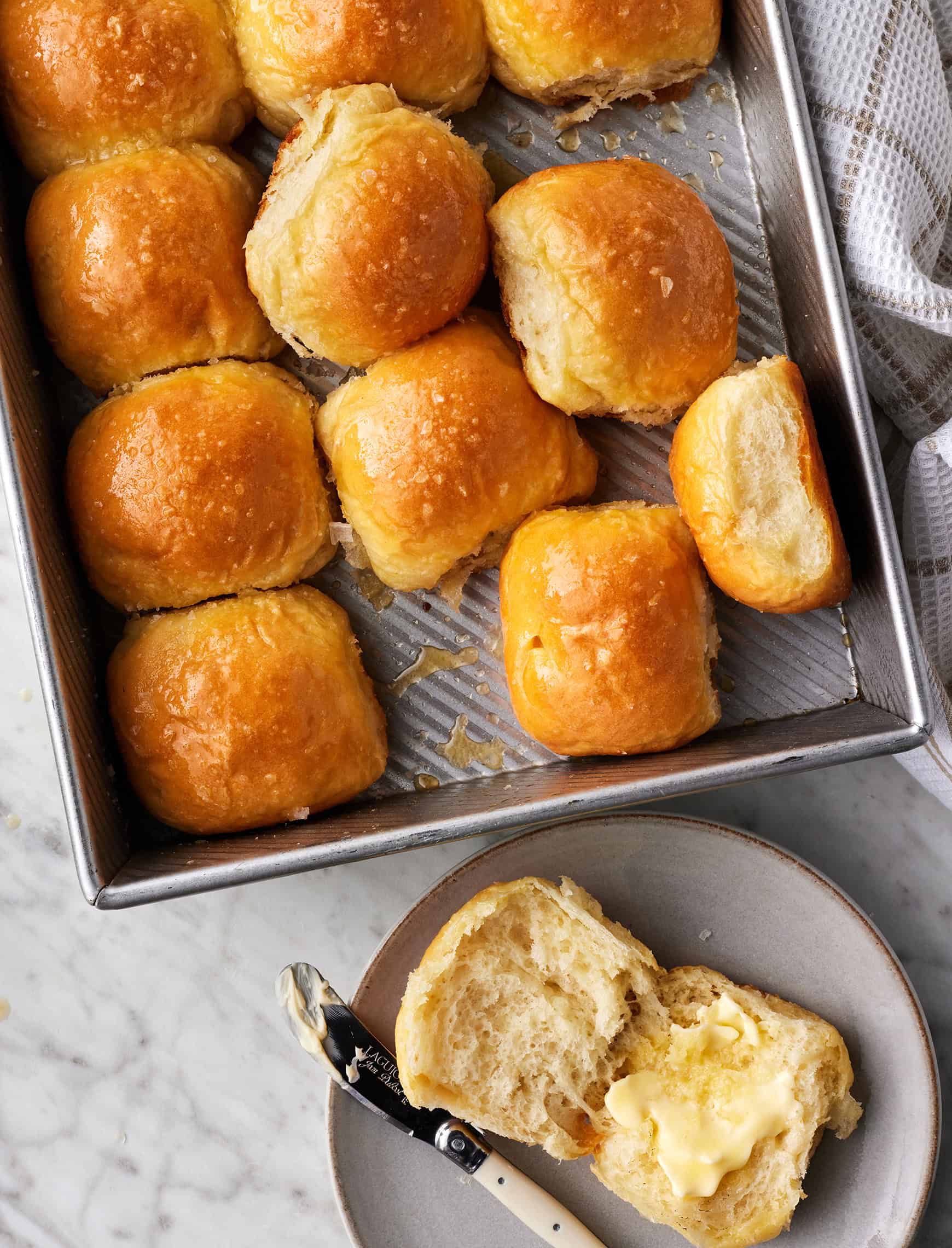
When the rolls are puffy, it’s time to bake! Place them on a low rack in a 350°F oven. Bake for 20 to 28 minutes, or until golden brown. Rotate the pan halfway through the bake time so that the rolls cook evenly.
Brush the warm rolls with butter. Serve immediately!
Tips for Making Homemade Dinner Rolls
- Make sure your yeast isn’t expired. Dead yeast=flat dinner rolls. No one wants those! Always check the expiration date on your yeast before you start baking. I also recommend proofing your yeast whether you’re using active dry or instant. It’s better to take the 5 minutes to proof it than to end up disappointed after hours of baking.
- Measure your flour accurately. It’s easy to scoop a cup of flour that’s packed too tightly, inadvertently using more flour than a recipe calls for. Weigh your flour whenever you can. If you don’t have a kitchen scale, use the spoon-and-level method for an accurate flour measurement.
- Warm the milk. Yeast loves warmth! To help activate it, warm your milk in the microwave for 15 to 30 seconds before you proof the yeast. It should be warm, but not scalding, ideally 105°F to 115°F. If it’s too hot, it can kill the yeast. If it’s too cold, the dough will be slow to rise.
- Set the dough somewhere warm to help it rise. We put ours on a sunny windowsill! A turned-off oven with the light on is a good option too.
Make-Ahead Options
- Make overnight rolls. One day ahead, prepare the dough, do the first rise, and shape the rolls. Place them in the baking pan and cover tightly with foil or plastic wrap. Instead of letting the rolls rise again at room temperature, refrigerate them overnight. The next day, let them stand at room temperature for 1 hour before baking according to the recipe.
- Freeze un-baked. Up to 1 month ahead, prepare the dough, do the first rise, and shape the rolls. Don’t do the second rise now. Instead, freeze the rolls in a single layer on a baking sheet until solid. Then, transfer to a freezer bag or airtight container and store in the freezer. Before baking, arrange the frozen rolls on a greased baking sheet or in a greased baking dish. Cover with a dish towel and let rise at room temperature for 4 to 5 hours, or until puffy. Bake according to the recipe, adding an extra 2 to 3 minutes to the bake time if needed to get the rolls to brown.
- Bake and freeze. These homemade dinner rolls freeze perfectly! Stash them in a bag or container in the freezer for up to 2 months. Let the frozen rolls thaw for a few hours at room temperature before wrapping them in foil, warming them in a 350°F oven, and serving.
How to Store
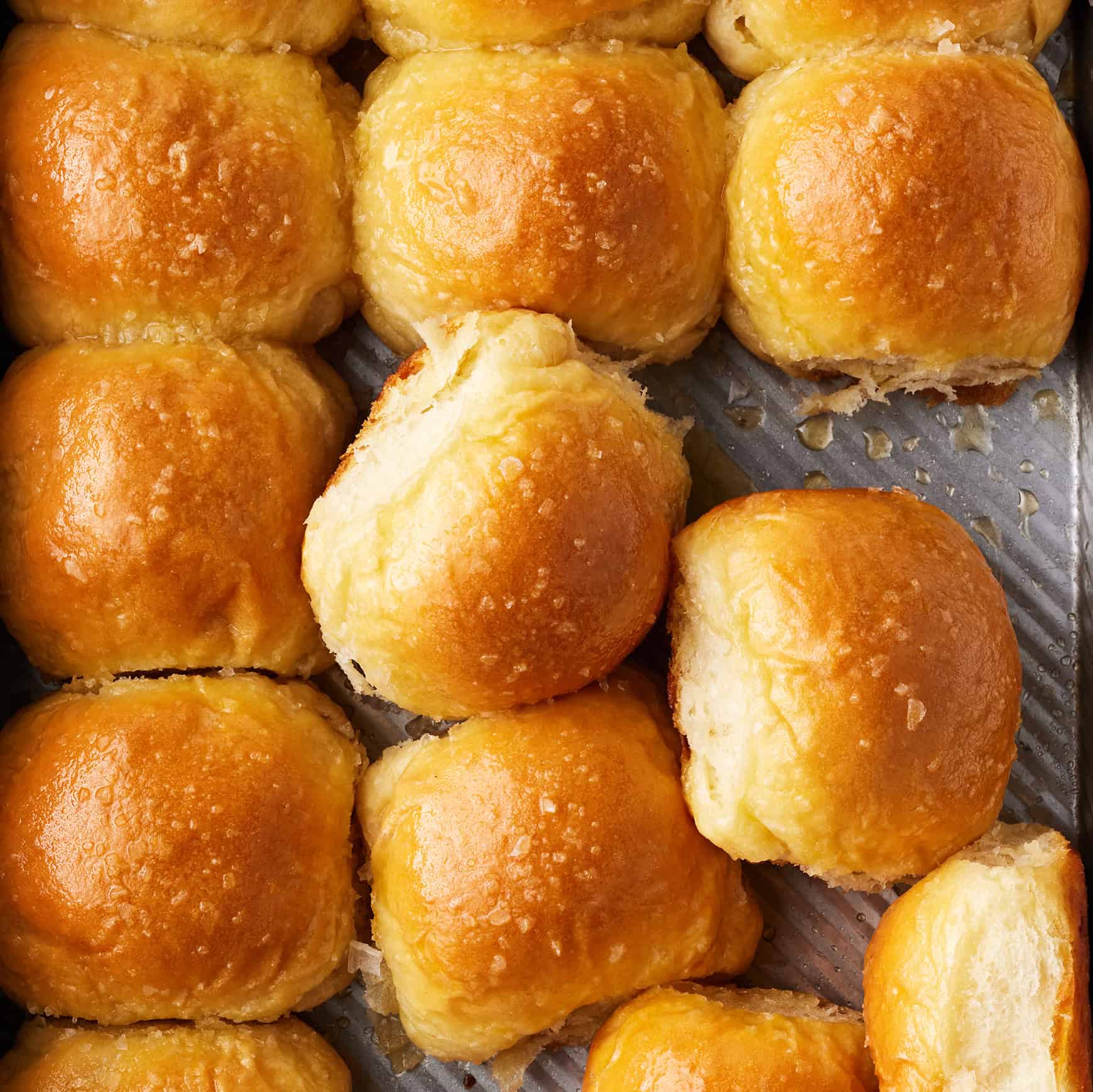
Store leftover dinner rolls in an airtight container at room temperature for up to 3 days. You can also freeze them for up to 2 months. Individual rolls thaw in about 30 seconds in the microwave or in under an hour at room temperature.
More Favorite Bread Recipes
If you love these homemade dinner rolls, try one of these easy bread recipes next:

Homemade Dinner Rolls
Ingredients
For topping
Instructions
-
In the bowl of a stand mixer fitted with a dough hook*, stir together the milk, yeast, and 1 tablespoon of the sugar. Proof for 5 minutes, or until the yeast is foamy. If the yeast doesn’t foam, discard the mixture and start again with new yeast.
-
Add the remaining sugar, the melted butter, and salt to the bowl. Mix on low speed to combine, then add 1 cup of the flour and mix on low speed until mostly combined. Add another 1 cup of the flour and mix on low speed to combine, then repeat with the remaining cup of flour. Increase the speed to medium and mix for 2 minutes, or until a cohesive, slightly sticky dough forms around the hook. It should be slapping the sides of the bowl and pulling away from the bottom.
-
Transfer the dough to a lightly floured surface and knead a few times to form into a ball. The dough should be slightly sticky, but if it’s too sticky to work with, work in a little more flour. Brush a large bowl with olive oil and place the dough inside. Cover with plastic wrap and set aside to rise for 1 to 2 hours, or until the dough has doubled in size.
-
Brush a quarter sheet pan or 9×13-inch baking dish with olive oil and set aside. Turn the dough out onto a clean work surface. Divide the dough into 15 equal pieces. Form each piece into a ball by rolling on the countertop with a cupped hand. Place each piece onto the prepared pan. Dust the tops with a very slight amount of flour to prevent sticking. Cover with plastic wrap and set aside for 1 hour, or until puffy.
-
Preheat the oven to 350°F and move an oven rack to a low position.
-
Bake the rolls for 20 to 28 minutes, or until golden brown, rotating the pan halfway.
-
Make the topping: In a small bowl, mix together the melted butter and a pinch of salt. Brush over the warm rolls and serve.
Notes